
Arthroceras subterminale
Arthroceras subterminale
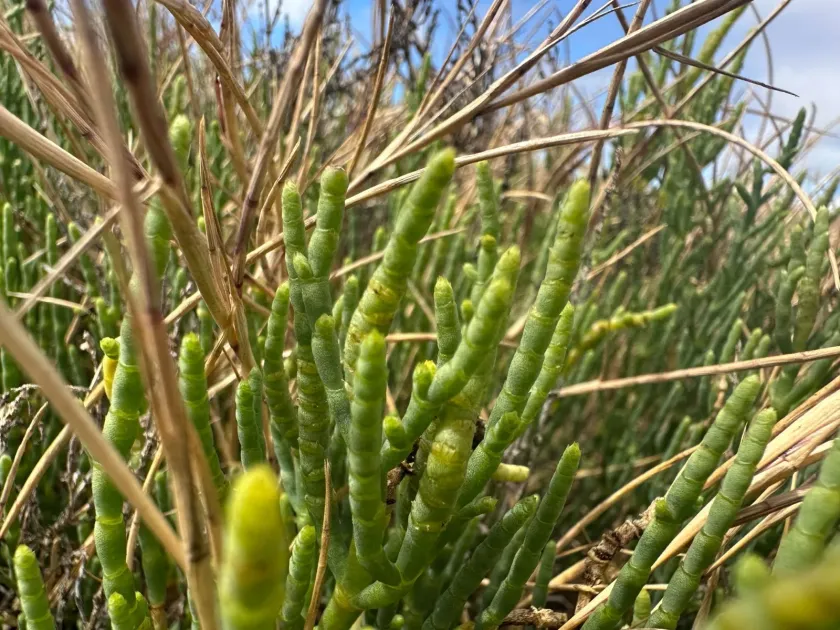
Description
Growing requirements
Arthroceras subterminale is a perennial halophytic plant belonging to the Amaranthaceae family, highly specialized for survival in hypersaline desert environments.
The plant exhibits unique morphological adaptations, including succulent, jointed stems and reduced leaves that prevent water loss in arid climates.
Its natural habitat consists of salt marshes and saline basins where the concentration of chlorides and sulfates inhibits the growth of common agricultural crops.
For successful cultivation, it requires high solar radiation and specific soil conditions characterized by high salinity levels, which act as a growth regulator.
The agronomic management of this species focuses on maintaining a natural balance of mineralized soil moisture, as freshwater irrigation is detrimental to the plant's health.
Yield
The primary agricultural utility of Arthroceras subterminale lies in its role as a forage crop for livestock, particularly in arid regions where grazing resources are scarce.
It provides essential browse for camels and small ruminants, offering a reliable source of fiber during periods when other forage species are dormant or unavailable.
Biomass production is intrinsically linked to the salinity of the environment; moderate salt levels promote better vegetative growth compared to non-saline conditions.
Researchers are exploring its application in phytoremediation, using the plant to stabilize saline soils and improve the health of degraded desert ecosystems.
While seed production is currently limited, the potential for using this crop in sustainable salt-affected land management strategies is gaining international attention.
Main diseases and pests
Overgrazing stands out as the most significant threat to the natural stands of Arthroceras subterminale, leading to soil compaction and reduced regeneration capacity.
Root rot pathogens become a primary concern when the soil drainage or salt balance is disrupted by improper irrigation practices involving low-salinity water.
Specific insect populations adapted to halophytic hosts can cause significant damage to the plant's succulent tissues, potentially impacting overall stand vigor.
The encroachment of invasive non-halophytic species, often triggered by climate-induced changes in soil chemistry, poses a long-term risk to its natural range.
Environmental stressors such as unseasonal frost can damage the sensitive, succulent tips of the plant, hindering the development of the annual growth cycle.