
Aerva javanica
Aerva javanica (Burm. f.) Juss. ex Schult.
Description
Sowing dates
Aerva javanica is a perennial herb belonging to the Amaranthaceae family, known for its extreme resilience in arid environments. Sowing is typically performed at the onset of the warm season when soil temperatures remain consistently high enough to support rapid germination.
Seedbed preparation is crucial; the soil should be fine-textured to ensure good contact between the tiny seeds and the earth. Because the seeds are small, they should be sown shallowly, ideally at a depth of 0.5 to 1 cm, to prevent exhaustion of energy reserves during sprout emergence.
Spacing is an important consideration in professional cultivation. Maintaining adequate distance between rows facilitates easier weeding and ensures that each plant receives the maximum amount of sunlight, as the species is highly photophilic.
After sowing, light irrigation is recommended to initiate the germination process. Once the seedlings reach the four-leaf stage, they become significantly more resistant to environmental stressors and begin developing their characteristic deep taproot system.
Crop establishment is often successful even in degraded soils, making this species an excellent candidate for land reclamation projects in areas where traditional crops fail to thrive due to water scarcity.
Growing requirements
This crop thrives in hot and dry climates, demonstrating a high tolerance for drought and soil salinity. It is well-suited for cultivation in semi-arid and arid zones where temperatures regularly exceed 30 degrees Celsius.
Soil requirements are relatively modest; the plant prefers well-drained, sandy, or stony substrates. It performs poorly in heavy clay soils that are prone to waterlogging, as the root system is highly susceptible to rot when oxygen levels in the soil are low.
Sunlight is the most critical environmental factor. The plant requires full, direct sun exposure to maximize biomass production and the synthesis of secondary metabolites. Shading or overcrowding leads to stunted growth and reduced vigor.
Nutrient requirements are low. While the plant can benefit from light organic fertilization, excessive nitrogen use should be avoided as it may make the plants more vulnerable to pest infestations and decrease their innate drought-resilience.
Effective water management involves providing just enough moisture to sustain growth during the initial establishment phase, after which the plant becomes largely self-sufficient, relying on its deep root system to access groundwater.
Yield
The yield of Aerva javanica varies significantly depending on the site conditions and the availability of water. Under irrigation, multiple harvests of fresh foliage can be achieved within a single growing season.
As a forage crop, it provides a consistent source of nutrients for livestock, maintaining protein content even when other vegetation dries up during seasonal droughts. This makes it a strategically important crop for pastoral systems.
When cultivated for medicinal purposes, harvest timing is strictly controlled. The concentration of active chemical compounds peaks at the onset of the flowering stage, necessitating precise planning of the harvest window.
Seed yields are generally moderate. Due to the indeterminate nature of the flowering, seeds do not ripen simultaneously, which often requires manual or careful mechanical harvesting to minimize loss due to shattering.
Ongoing research suggests that integrating this plant into arid-land farming systems can improve total land productivity, as it serves both as a soil stabilizer and a valuable source of biomass for various industrial applications.
Main diseases and pests
Aerva javanica is generally robust, but it can be affected by fungal diseases such as leaf spots if grown in environments with poor air circulation or excessive humidity. Maintaining clean, well-aerated rows is the primary defense strategy.
Root rot is the most serious threat to the crop, typically triggered by improper irrigation or poor drainage. Infected plants show signs of wilting and yellowing, and if the condition is not addressed, it can lead to total crop failure.
Insect pests, primarily lepidopteran larvae and grasshoppers, may cause localized damage to the foliage. However, the plant's tough, fibrous texture often acts as a natural deterrent, limiting the scale of such outbreaks in well-managed stands.
Integrated pest management (IPM) practices, including the use of certified seed and crop rotation, are recommended. Avoiding monocultures on large scales can also help break pest life cycles and reduce the pressure from herbivores.
- Ensure adequate drainage to prevent root rot.
- Monitor for early signs of leaf spot infection.
- Avoid over-crowding to maintain healthy air circulation.
Harvesting
Mechanical harvesting of the foliage is common for larger plantations. The cutter bars should be set at a specific height to leave enough of the base plant for rapid regrowth, allowing for multiple harvests within one year.
Post-harvest handling is critical for maintaining quality. The foliage should be dried immediately in a ventilated, shaded area to prevent the degradation of chemical compounds due to high-temperature moisture loss or fermentation.
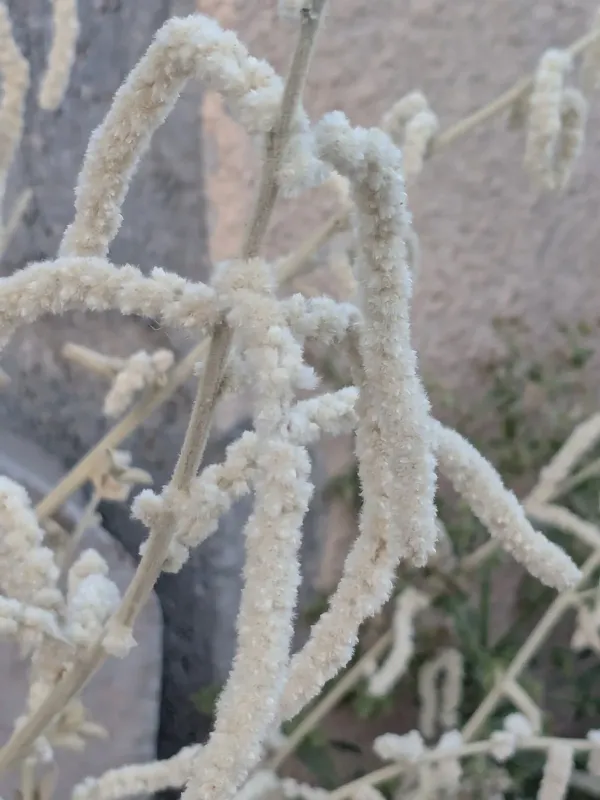
Seed harvesting should be initiated when the silver-white flower spikes begin to darken. Because the seeds are light and prone to wind dispersal, timing is essential to ensure maximum capture of the seed yield.
Proper storage of the harvested material requires cool, dry conditions to prevent mold growth. If the biomass is intended for forage, it can be baled once the moisture content drops to safe levels for storage.
Utilizing the harvest residues as soil amendment can further benefit the field by returning organic matter to the soil, which helps to improve soil structure and water retention for subsequent crop cycles.