
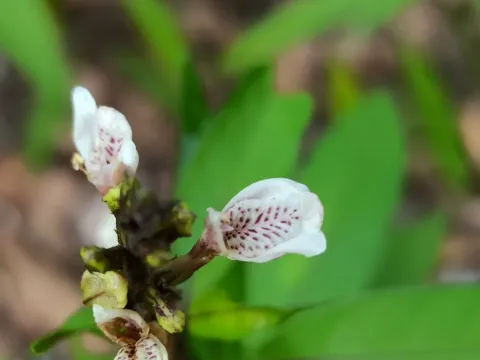
Justicia gendarussa
Justicia gendarussa
Justicia gendarussa is a perennial evergreen shrub belonging to the Acanthaceae family, widely recognized for its medicinal applications in traditional practices.
What the section contains
Justicia gendarussa
Propagation is most successfully achieved through stem cuttings taken from mature plants, which allows for consistent quality and faster establishment.
Cuttings should be placed in a well-draining, sterile growing medium to promote rapid root development while preventing moisture-related fungal issues.
The optimal time for establishing new plantings is during the warm season, ensuring that the soil temperature remains consistently above 22 degrees Celsius.
Space the plants adequately, providing at least 50 centimeters between individual specimens to facilitate air circulation and growth during the vegetation period.
This crop thrives in tropical environments, requiring high ambient humidity and protection from cold drafts or temperatures below 15 degrees Celsius.
Soil requirements include well-drained, fertile soil rich in organic matter with a neutral to slightly acidic pH to support balanced growth.
Consistent watering is essential for this species; the soil should be kept moist at all times, but irrigation must be carefully controlled to prevent waterlogging.
The plant prefers partial shade or bright, filtered light; excessive exposure to direct tropical sun can cause leaf scorch and decrease the quality of harvested biomass.
Regular fertilization with balanced NPK nutrients during the active growing season is recommended to maintain the production of essential phytochemicals.
Harvesting primarily involves collecting leaves and young, tender stems, which contain the highest concentration of the plant's medicinal compounds.
Manual harvesting is the preferred method to prevent bruising the plant and to allow for continuous regeneration throughout the growing cycle.
Post-harvest processing involves immediate drying in a shaded, ventilated area to prevent the degradation of heat-sensitive active ingredients.
Dried leaves should be processed to a uniform particle size and stored in opaque, airtight containers to protect them from light and environmental humidity.
Maintaining hygienic standards during harvesting and post-harvest handling is critical to ensure the final product meets pharmaceutical quality requirements.
Common agricultural threats include spider mites and aphids, which frequently target the plant in environments with insufficient humidity control.
Fungal pathogens such as powdery mildew may develop if there is poor air circulation or excessive moisture retained on the foliage.
Integrated pest management strategies should be implemented, emphasizing the use of biological controls over harsh chemical interventions.
Pruning infected branches is a standard practice to limit the spread of diseases and to encourage healthy new vegetative growth.
Routine monitoring of the crop is necessary to detect infestations early, significantly reducing the potential for economic loss in a commercial setting.