
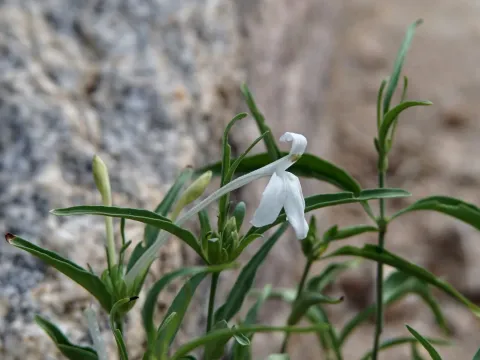
Justicia longii
Justicia longii
Justicia longii belongs to the Acanthaceae family, a group known for its diverse tropical and subtropical species. This plant thrives in environments that mimic its natural habitat, requiring specific conditions to maintain its structural integrity and ornamental appeal throughout the growing season.
What the section contains
Justicia longii
The selection of an appropriate growing medium is crucial for the health of Justicia longii. It requires a well-draining, nutrient-rich potting mix that prevents the compaction of soil around the root system. A balance of organic matter and inorganic perlite or sand is recommended to ensure optimal aeration.
Regarding light exposure, the plant performs best under filtered or bright indirect light. Intense midday sun can be detrimental to the foliage, leading to chlorosis or necrosis, while insufficient light levels will inevitably lead to leggy growth and reduced frequency of flowering.
Consistent temperature maintenance is a fundamental aspect of the plant's husbandry. Ideally, the plant should be kept within a temperate range of 20°C to 25°C. Rapid fluctuations in temperature or exposure to cold drafts should be avoided at all costs to prevent tissue damage.
Watering frequency should be calibrated based on the environmental humidity and transpiration rates. During the active growing period, the substrate should be kept consistently moist but never waterlogged. Monitoring the plant's reaction to watering cycles is essential for long-term health.
Spider mites are common pests that thrive in the low-humidity environments often found in indoor cultivation of Justicia longii. Regular misting and maintenance of adequate airflow are the primary methods for preventing widespread infestation.
Fungal pathogens such as powdery mildew can affect the plant if circulation is restricted. Managing the humidity levels and ensuring that foliage remains dry during the evening hours are effective strategies to prevent the onset of fungal infections.