
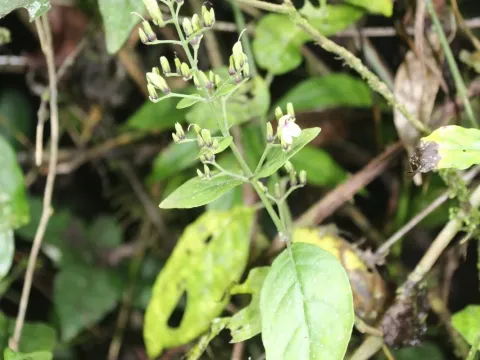
Justicia extensa
Justicia extensa
Justicia extensa is a perennial plant belonging to the Acanthaceae family. It is native to tropical and subtropical regions, where it thrives in shaded or semi-shaded environments, often under the forest canopy or in moist tropical thickets.
What the section contains
Justicia extensa
The plant requires well-drained, nutrient-rich soil to develop optimally. It is particularly sensitive to waterlogging, so soil aeration is essential. Organic matter enrichment significantly boosts the vegetative growth of this species in cultivated settings.
Climate requirements include high ambient humidity and a frost-free environment. Temperatures should ideally range between 20°C and 28°C. Being a tropical plant, it does not tolerate cold winds or sudden drops in temperature, which can cause leaf abscission.
Botanically, Justicia extensa exhibits simple, opposite leaves and characteristic inflorescences typical of the Justicia genus. The flowers are zygomorphic, reflecting the plant's evolutionary adaptation to specific pollinators in its native habitat.
Economically, the species is investigated for its potential pharmacological applications due to the presence of bioactive compounds. It is also utilized in horticulture as a decorative plant in conservatories and greenhouse environments due to its foliage and floral interest.
Common pests include spider mites and mealybugs, which are particularly problematic in dry indoor environments where the natural humidity is lacking, weakening the plant's defenses.
Fungal pathogens such as root rot and powdery mildew represent the primary disease threats. These are often exacerbated by poor air circulation and excessive moisture in the root zone or on the foliage.
Integrated pest management is recommended to control populations of harmful insects without relying heavily on broad-spectrum chemicals that might negatively affect plant growth.
Preventative measures include maintaining optimal spacing between individual plants to improve airflow and strictly controlling irrigation cycles to prevent water accumulation.
Regular sanitation, such as removing senescent leaves and disinfecting pruning tools, is critical to maintaining a healthy crop and preventing the spread of opportunistic fungal infections.