
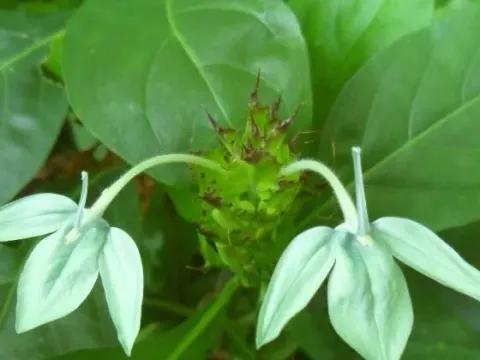
Justicia ecbolium
Justicia ecbolium
Justicia ecbolium, a member of the Acanthaceae family, is a tropical perennial plant. In its native habitats, seeds typically germinate at the onset of the rainy season when environmental moisture levels are sufficient for development.
What the section contains
Justicia ecbolium
When cultivating this species in controlled environments, seeds are sown into a well-draining, lightweight substrate. Maintaining a stable temperature between 22–25 degrees Celsius is critical for high germination rates.
The time required for emergence ranges from two to four weeks depending on the age of the seed and substrate moisture. Once the seedlings reach the two-leaf stage, they require careful handling during transplantation to individual pots.
Vegetative propagation via cuttings is a common practice. Semi-hardwood cuttings are prepared during the active growth phase and rooted in a mixture of peat and perlite under high-humidity conditions.
Ensuring that the propagation environment is free from pathogens is vital, as young plants are particularly susceptible to damping-off diseases during the initial establishment period.
The culture has specific requirements regarding temperature, as it is a tropical plant that is sensitive to cold stress. The optimal temperature for continuous growth is between 20–30 degrees Celsius.
Soil conditions must prioritize aeration and drainage. Loamy soils with a neutral or slightly acidic pH are ideal, while heavy, compacted soils significantly inhibit root penetration and growth.
Regular but moderate watering is necessary. Waterlogged conditions must be avoided at all costs, as they quickly lead to root rot and systemic failure of the plant's vascular tissue.
High light intensity is preferred, but direct exposure to harsh midday sun should be avoided to prevent leaf scorch. Providing dappled or filtered light is often the best approach for long-term health.
Supplemental fertilization with a balanced NPK fertilizer is recommended during the growing season to support the production of foliage and floral structures.
Yield for Justicia ecbolium is primarily measured by the total biomass of leaves and flowers, which are sought after for their potential medicinal and pharmacological properties.
Agricultural productivity can be maximized through regular pruning, which encourages the development of lateral shoots and a denser canopy, thereby increasing the harvestable surface area.
The yield is highly dependent on environmental management and the maturity of the plants. Peak production is usually observed in second-year plants under optimal nutrient and light conditions.
Failure to provide adequate nutrients or poor water management will result in stunted growth and a significant reduction in the quantity of usable plant material.
Standardized harvesting methods are essential to maintain the quality and chemical consistency of the raw material, which is critical for industrial applications.
Common pests that pose a threat to this culture include spider mites and mealybugs, which thrive in low-humidity environments and can quickly infest foliage.
Root diseases, particularly those caused by Pythium or Phytophthora species, are common in poorly drained soils and can be fatal to the entire crop if not addressed immediately.
Aphids can colonize the soft, young shoots, leading to stunted growth and leaf distortion. Integrated pest management strategies, including the use of neem oil, are often effective.
Powdery mildew may occur when ventilation is inadequate and humidity levels spike, requiring improved air circulation to manage the spread of the fungus.
- Implement strict crop rotation protocols to prevent soil-borne pathogen buildup.
- Perform weekly visual inspections of plant undersides for signs of infestations.
- Maintain proper spacing between plants to optimize airflow and reduce humidity around the leaves.
Harvesting is typically performed by hand in the early morning to ensure that the concentration of secondary metabolites in the leaves is at its daily peak.
Post-harvest handling is critical. Plant material must be cleaned and sorted immediately to remove any damaged leaves or contaminants that could degrade the quality of the batch.
The drying process should take place in a climate-controlled room with adequate airflow and low temperatures to prevent the loss of volatile compounds and essential oils.
Once dried, the product is stored in airtight containers in a cool, dark environment to maintain its potency and shelf life for industrial or laboratory use.
A final rejuvenation pruning after harvest encourages the plant to enter a new growth cycle, ensuring productivity for subsequent seasonal harvests.