
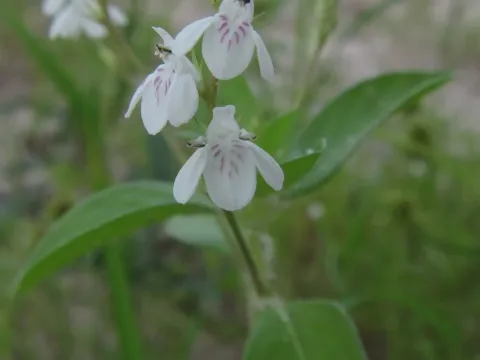
Justicia exigua
Justicia exigua
Justicia exigua belongs to the Acanthaceae family and requires specific conditions to thrive. Seeds should be sown in a well-drained, nutrient-rich potting medium to ensure rapid germination.
What the section contains
Justicia exigua
The optimal time for sowing is during the spring, when temperatures remain consistently between 20°C and 25°C. Shallow sowing is recommended to prevent seed decay in the soil.
Maintaining a consistent moisture level is vital during the first two weeks after planting. Using a light cover can help retain humidity, which is essential for uniform seedling emergence.
Once the seedlings reach a height of 5–10 cm, they can be transplanted to their final growing location. Proper spacing is crucial to prevent competition for light and nutrients among the plants.
Agricultural management during the early stages includes regular irrigation and the removal of weeds to allow the plants to establish a strong root system.
This species is well-suited for tropical and subtropical environments. It requires significant warmth and consistent humidity to support its biological development throughout the growing season.
The ideal soil profile is slightly acidic to neutral, with plenty of organic matter. Good soil structure ensures that roots are aerated and not prone to waterlogging, which is a major risk for the plant.
Justicia exigua thrives in areas with partial to full sunlight. However, in extremely hot climates, some shade during the peak of the day is beneficial to prevent leaf scorch.
Nutrient management is key to sustained growth. Balanced NPK fertilizers should be applied during the active vegetation phase to promote leaf density and overall plant vigor.
Water management involves monitoring soil saturation levels constantly. The plant performs best when the substrate is kept moist but allowed to dry slightly on the surface between waterings.
The economic yield of Justicia exigua is measured primarily by its biomass production. High-quality cultivation leads to vigorous foliage growth, which is highly sought after for various applications.
Yield stability is directly proportional to the control over environmental factors. Greenhouse cultivation often results in more predictable outcomes compared to open-field farming.
Harvesting should be timed to match the plant's physiological peak. Collecting the plant material just before it reaches the full flowering stage often yields the best balance of active compounds.
Through careful pruning and consistent nutrient intake, farmers can encourage secondary growth, effectively increasing the total biomass harvested per unit area.
Proper record-keeping regarding yield data over several seasons allows for better optimization of cultivation techniques and resource allocation in future cycles.
Typical pests affecting this culture include spider mites and aphids, which can quickly colonize the underside of leaves if the humidity remains too low.
Fungal diseases like powdery mildew and root rot represent significant risks in high-humidity environments. Improving air circulation is the most effective preventative measure against these threats.
Integrated pest management (IPM) practices, such as the use of natural predators or organic sprays, are recommended to maintain the plant's health without contaminating the crop.
Regular monitoring for symptoms of deficiency, such as yellowing leaves or stunted growth, allows for early intervention before a widespread outbreak occurs.
Keeping the agricultural tools clean and rotating crops helps reduce the buildup of soil-borne pathogens that could potentially infect the root system of the crop.
The harvest of Justicia exigua is a manual process that ensures the delicate plant parts remain intact. Careful handling is necessary to maintain product quality.
Harvesting usually takes place in the early morning to ensure that the plant tissues have maximum turgor and that active components remain stable.
After the harvest, prompt drying is essential. The plant material should be placed in thin layers in a shaded, well-ventilated area to prevent fermentation and mold growth.
Logistics are vital for large-scale operations. Transporting the raw material quickly to the processing facility prevents heat buildup, which can degrade the plant's quality.
Quality control after the harvest includes sorting and checking for any damaged parts, ensuring that only the highest quality product is prepared for storage or market.