
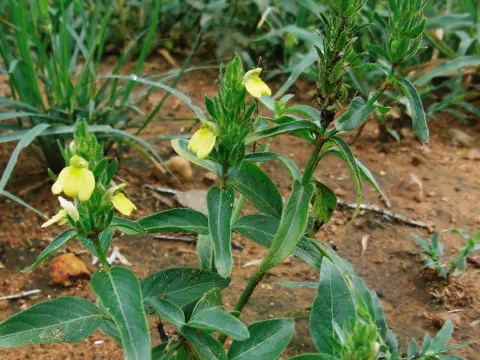
Yellow Justicia
Justicia flava
Yellow Justicia is a tropical perennial species that requires specific thermal conditions for successful propagation. Seeds should be sown indoors in late winter or early spring to ensure the plants are well-established before the outdoor growing season begins in warmer months.
What the section contains
Yellow Justicia
For optimal germination, a light, well-draining seed starting mix is essential. Seeds should be planted at a shallow depth of about 0.5 centimeters and kept in a warm environment, ideally between +22 and +25 degrees Celsius, to support uniform and healthy seedling development.
Maintaining consistent soil moisture is crucial during the germination phase. Covering the seed trays with a plastic dome can help create a humid microclimate, but it is important to provide ventilation to prevent the growth of mold on the soil surface during this sensitive stage.
Transplanting seedlings into individual pots is recommended once they develop two or three sets of true leaves. This promotes better root development and prepares the young plants for their eventual transfer to a permanent location, whether in a container or open garden bed.
Acclimatization of the seedlings is a vital step before final planting. Gradually exposing the plants to outdoor temperatures and light over a period of one to two weeks helps prevent environmental stress, leading to more robust and vigorous growth in the garden setting.
As a member of the Acanthaceae family, Yellow Justicia thrives in fertile, well-draining soil with a neutral to slightly acidic pH. The plant is sensitive to waterlogged conditions, so choosing a planting site with good natural drainage or adding organic matter to improve soil structure is highly beneficial.
This species prefers bright, filtered sunlight. While it can adapt to different light conditions, intense direct afternoon sun may scorch the leaves. Providing partial shade during the peak heat of the day helps maintain the plant's aesthetic quality and prevents excessive transpiration.
Watering requirements for Yellow Justicia are moderate. The soil should be kept consistently moist but never soggy. In arid climates or during dry spells, supplemental irrigation is necessary to support the plant's metabolic processes and prevent premature wilting of foliage.
The optimal temperature range for the development of Yellow Justicia is between +20 and +28 degrees Celsius. The plant is highly sensitive to cold and should be protected from temperatures below +10 degrees Celsius to prevent damage or cessation of growth during the cooler months.
Fertilization with a balanced, water-soluble fertilizer during the active growing season will support flowering and overall vigor. It is important not to over-fertilize, particularly with nitrogen, as this can encourage excessive leafy growth at the expense of floral development.
The most common pests affecting Yellow Justicia include spider mites, whiteflies, and aphids. These insects thrive in hot, dry conditions and can cause significant damage by feeding on the sap, leading to leaf yellowing, stunting, and overall plant decline if left unmanaged.
Root rot is the most serious threat to the health of this plant, often resulting from overwatering or poor soil drainage. Pathogenic fungi attack the root system, causing the plant to wilt rapidly even when the soil appears moist, which often leads to total plant loss.
Integrated pest management is recommended for controlling insect populations. Regularly inspecting the undersides of leaves and using biological controls or insecticidal soaps can mitigate outbreaks without causing significant harm to the surrounding ecosystem or beneficial insects.
Prevention of fungal diseases is largely based on proper cultural practices. Ensuring adequate spacing between plants allows for good air circulation, which reduces the humidity around the foliage and minimizes the risk of spore germination and subsequent infection.
If disease symptoms are observed, affected plant parts should be promptly removed and discarded to stop the spread of pathogens. Applying appropriate fungicides when necessary, combined with corrective adjustments to irrigation and airflow, can help the plant recover and return to health.