
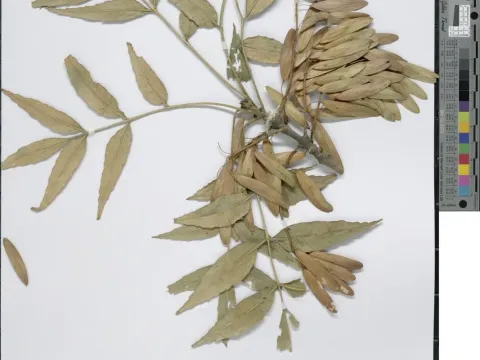
Balkan ash
Fraxinus holotricha
Balkan ash (Fraxinus holotricha) is a distinctive species within the Oleaceae family, valued for its unique foliage and structural form. Native to the Balkan region, it has adapted to specific climatic conditions that favor moderate warmth and seasonal rainfall patterns.
What the section contains
Balkan ash
The tree thrives in fertile, well-draining soil types. A deep, nutrient-rich loam provides the ideal environment for its root development, ensuring stability and consistent moisture uptake throughout the growing season.
Regarding sunlight, Fraxinus holotricha is essentially heliophilic. It requires full exposure to solar radiation to maintain its dense canopy and prevent the thinning of branches that often occurs in shaded or crowded habitats.
Temperature tolerance is a significant factor in its cultivation. While it appreciates a temperate climate, it requires protection from extreme winter frosts and desiccating winds, which can damage the tender buds and young bark of the tree.
In terms of хозяйственное (economic) use, the Balkan ash is predominantly deployed in ornamental landscaping. Its ability to create shade and its aesthetically pleasing leaf structure make it an excellent choice for urban avenues, botanical gardens, and large private estates.
Emerald Ash Borer (EAB) remains the most critical threat to the species, causing widespread damage by tunneling under the bark and disrupting essential nutrient transport.
Ash dieback, caused by the fungus Hymenoscyphus fraxineus, can severely affect the health of the tree, leading to crown loss, lesions on the stems, and eventual death of the specimen.
Various scale insects may infest the branches, leading to a general decline in tree vigor and the production of honeydew that fosters sooty mold growth on the leaves.
Root rot pathogens, such as Phytophthora, can infect the root system in waterlogged soils, resulting in wilting and poor nutrient absorption regardless of the tree's size.
Integrated pest management, including regular monitoring and the use of targeted biological or chemical treatments, is essential to maintaining the longevity and aesthetic value of Balkan ash specimens.