
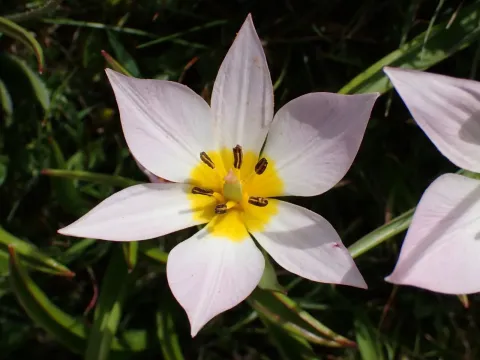
Baker's Tulip
Tulipa bakeri
Planting of Baker's Tulip bulbs should take place in the autumn months of September and October, ensuring the soil is sufficiently cooled.
What the section contains
Baker's Tulip
It is vital to provide enough lead time before the first frost, allowing the root system to establish itself properly in the soil environment.
The bulbs should be planted at a depth of approximately three times their diameter to ensure adequate protection against cold weather.
Using a grit or sand layer at the bottom of the planting hole is recommended to improve drainage and prevent rot in the bulb's base.
Proper spacing between bulbs is essential to ensure adequate airflow, which significantly reduces the risk of fungal disease outbreaks.
Tulipa bakeri, a member of the Liliaceae family, is a distinct botanical species originating from the mountainous terrains of Crete.
This species thrives in full sun exposure, requiring open locations that receive direct light throughout the majority of the day.
The soil must be well-drained and alkaline to neutral in pH, as heavy, waterlogged soils are detrimental to the survival of the bulbs.
Regular but moderate watering is required during the spring growth phase, ensuring the soil remains moist without becoming soggy.
While the plant is quite hardy, providing a light mulch layer in winter can protect the bulbs from extreme temperature fluctuations.
Grey mold (Botrytis) is a significant threat to Baker's Tulip, especially in seasons characterized by high humidity and poor circulation.
Fusarium wilt can devastate bulb populations if they are stored in damp conditions or if the planting site lacks proper soil drainage.
Bulb mites represent a major underground pest, often feeding on the tissues and causing the plants to become stunted and prone to secondary rot.
Aphids are a common concern in the spring, as they not only damage the leaves but also serve as vectors for viral diseases like tulip breaking.
Implementing a strict sanitation program, including the disposal of infected plants, is crucial for maintaining the health of the tulip bed.
Harvesting the bulbs should be performed after the foliage has naturally withered and turned yellow, indicating the cycle is complete.
Once lifted, the bulbs must be cleaned and allowed to dry in a shaded, well-ventilated area to avoid sunscald and excessive dehydration.
Storage requires consistent temperatures and good airflow, usually starting around 20–25 degrees Celsius and gradually dropping until autumn.
Sorting by size allows for better management of the collection, separating flowering-sized bulbs from smaller offsets meant for propagation.
Regular lifting and replanting every year or two ensures the bulbs remain vigorous and helps to prevent the overcrowding of the flower bed.