
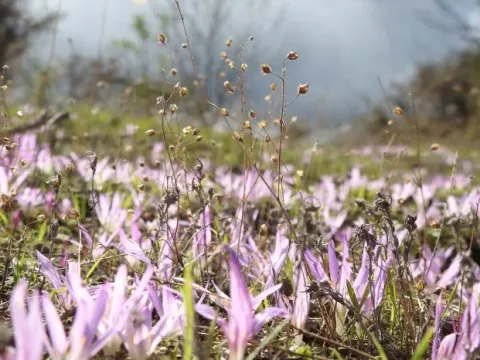
Autumn squill
Prospero autumnalis
Prospero autumnalis is a bulbous perennial belonging to the Asparagaceae family. Unlike spring-flowering bulbs, this species follows a distinct lifecycle adapted to Mediterranean climates.
What the section contains
Autumn squill
The bulbs should be planted in late summer, ideally in August, before the autumn flowering cycle begins. This timing allows the plant to establish roots while the soil is still warm.
Planting depth should be approximately twice the height of the bulb, usually ranging from 5 to 7 centimeters. A spacing of 10 centimeters between plants ensures adequate airflow.
Propagation via seeds is possible; seeds are typically sown in autumn in pots kept outdoors. This allows the seeds to undergo the necessary cold stratification period during winter.
It is essential to place the bulbs in well-draining soil, ensuring that the base of the bulb is in contact with a small amount of grit to prevent excess moisture retention.
The culture thrives in full sun, which is critical for the development of its characteristic autumn flower spikes. Shaded areas result in weak growth and reduced flowering.
Well-draining, sandy or loamy soil is mandatory. The species is highly susceptible to rot if water persists around the bulb, especially during the dormant winter months.
Climate requirements include warm, dry summers and mild, wet winters. In colder zones, the bulbs must be protected with mulch to prevent severe freezing of the soil.
Fertilization should be kept to a minimum. A light application of bone meal at the time of planting is usually sufficient to support the nutritional needs of the bulb.
Minimal maintenance is required. Once established, the plants prefer to remain undisturbed for several years until they become overcrowded and require division.
Harvesting is primarily relevant for the propagation of daughter bulbs. Division should occur in late summer, just as the foliage dies back and the plant enters dormancy.
Carefully lift the bulb clumps using a garden fork to avoid damaging the delicate basal plates. Separate the individual bulbs gently by hand or with a sterile tool.
After separation, the bulbs should be cleaned of soil and inspected for any signs of damage or decay. Healthy bulbs can be replanted immediately in prepared beds.
If bulbs need to be stored, they should be kept in a cool, dark, and well-ventilated area in a bag of dry peat or sawdust to prevent desiccation.
Never leave the harvested bulbs exposed to direct sunlight or high temperatures, as this can severely dehydrate the tissues and significantly reduce their viability.
The most significant threat is fungal rot caused by improper drainage. Once established in the bulb tissue, it is difficult to treat, often leading to total loss.
Aphids can sometimes infest the young flower stalks, sucking sap and weakening the plant. Regular monitoring during the active growth phase is advised.
Insects like the bulb scale mite can cause stunted development and distorted leaves. Treatment involves dipping the bulbs in a warm water bath or using specific acaricides.
Excessive humidity can encourage mildew on the foliage. Proper spacing and airflow are the best cultural methods for preventing the spread of such diseases.
Slugs are opportunistic pests that often target the emerging shoots. Protective measures like copper tape or physical barriers are effective in managed garden settings.