
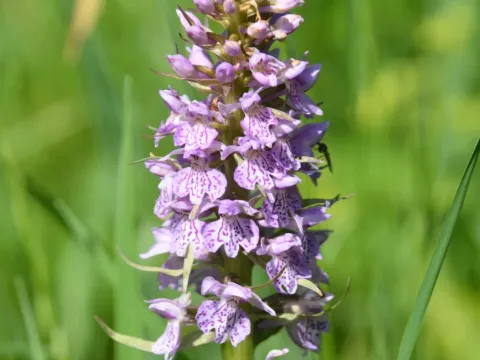
Baltic marsh orchid
Dactylorhiza baltica
The Baltic marsh orchid (Dactylorhiza baltica) is a perennial herbaceous plant belonging to the Orchidaceae family. It is typically found in lowland marshes, fens, and wet meadows, showing a strong affinity for specific wetland ecosystems.
What the section contains
Baltic marsh orchid
This species requires high soil moisture levels and thrives in alkaline or neutral substrates. Its distribution is limited to areas where the water table remains relatively high throughout the growing season, which is essential for its specialized root system.
Botanically, it is characterized by palmate tubers, which store energy for the plant. It produces an erect stem topped with a dense spike of purple or violet-colored flowers, which are highly attractive to specific insect pollinators.
Regarding climate, the plant is adapted to Northern European conditions, showing resilience against cold winters. However, its survival is highly dependent on the stability of its microclimate and the preservation of its native soil composition.
It is important to note that the Baltic marsh orchid is not a crop for commercial agriculture. It is recognized as a vulnerable or protected species in most of its range, and its preservation relies on habitat conservation rather than agricultural production.
The primary threat to the Baltic marsh orchid is the destruction of its natural habitat caused by large-scale land drainage and agricultural land conversion.
Runoff from surrounding agricultural fields, carrying synthetic fertilizers and pesticides, drastically alters the nutrient balance of the soil, making it hostile for this sensitive orchid.
Various insects, including certain types of aphids and larvae, may cause damage to the foliage and inflorescences, particularly when the plant is stressed by environmental changes.
Fungal pathogens represent a significant risk, especially in years with unstable water levels, leading to rot in the tuberous roots and overall plant decline.
Lack of specialized pollinators due to the loss of biodiversity in wetland areas remains a critical barrier to the successful reproduction and spread of this rare species.