
Faxon fir
Abies faxoniana
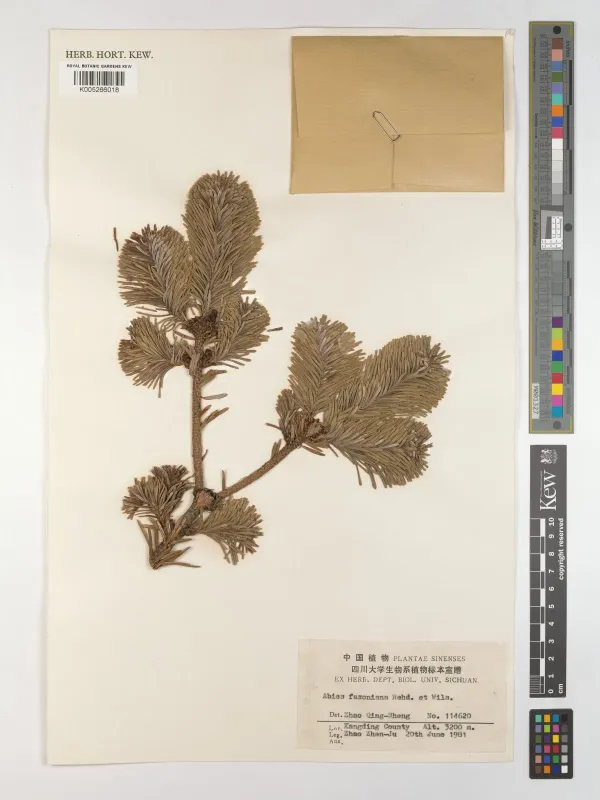
Description
Growing requirements
The Faxon fir (Abies faxoniana) is a prominent species within the Pinaceae family. This majestic evergreen conifer is highly valued for its dense, conical habit and its ability to thrive in high-altitude environments.
Native to the mountains of Western China, specifically in provinces like Sichuan, this fir is adapted to cold temperate climates. It is typically found at altitudes ranging from 2700 to 3800 meters, thriving in cool and humid conditions.
Botanically, it is distinguished by its deep green needles featuring silvery-white stomatal bands on the underside. Its young branchlets are characteristically pubescent, often with a reddish-brown hue that contrasts beautifully with the older bark.
For successful cultivation, Faxon fir requires moist, well-drained, acidic to neutral soils. It performs best in locations that offer protection from intense midday sun and drying winds, as it is accustomed to the sheltered microclimates of mountain valleys.
In terms of usage, the species serves as a significant component of mountain forests and is increasingly sought after by arboretums and specialized gardeners for its unique aesthetic and hardiness in temperate climates.
Main diseases and pests
One of the primary threats to Abies faxoniana is the development of root rots, which are commonly triggered by waterlogged soil conditions or poor aeration, preventing the roots from accessing sufficient oxygen.
Needle cast diseases, caused by various fungal pathogens, can lead to premature shedding of foliage. These diseases are usually most prevalent in areas with high humidity and insufficient air circulation around the canopy.
Insect pests, such as the woolly adelgid, represent a significant concern for the vitality of the tree. These pests cluster on the branches and extract sap, which can weaken the tree and invite secondary infections.
Maintaining tree vigor is the best defense against pests; a healthy tree with a well-mulched base and adequate space is significantly more resilient to biotic stressors than a neglected specimen.
Integrated pest management strategies, involving both cultural practices and targeted chemical treatments, are recommended if pest populations cross established economic or aesthetic thresholds for the plantation.