
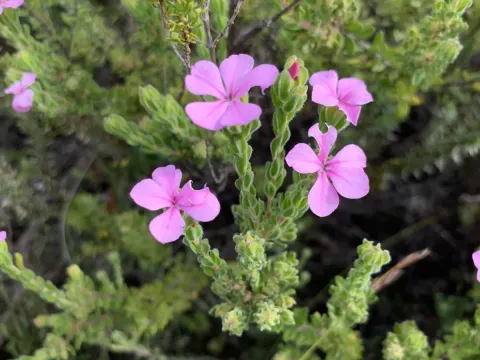
Acmadenia mundiana
Acmadenia mundiana
Acmadenia mundiana belongs to the Rutaceae family and is an evergreen shrub native to the Cape region of South Africa. It thrives in Mediterranean-type climates, characterized by dry, hot summers and cool, damp winters. The plant is a characteristic element of the local fynbos vegetation.
What the section contains
Acmadenia mundiana
Botanically, this species is defined by its dense, upright habit and narrow, leathery leaves. These leaves contain essential oil glands that release a distinct aromatic fragrance when crushed, a common trait among many members of the Rue family. Its small, star-like flowers often bloom in terminal clusters, showcasing white to pale pink hues.
The culture requires exceptional soil drainage, as its root system is highly susceptible to root rot if waterlogged. It performs best in acidic to neutral, nutrient-poor sandy soils, which mimic its natural habitat. Being a heliophyte, it demands high levels of light, though protection from intense midday heat is recommended in warmer cultivation zones.
Agrotechnical management focuses on maintaining a balanced watering schedule during the active growing season, followed by a dry rest period to ensure plant longevity. It is crucial to avoid heavy fertilization, especially with phosphorus, as South African fynbos plants are often adapted to phosphorus-deficient soils and can suffer from nutrient toxicity.
In terms of practical utility, Acmadenia mundiana is used primarily in ornamental horticulture and landscape design. Due to its compact growth, wind resistance, and attractive flowering period, it serves as an excellent candidate for rock gardens, xeriscaping, and containers in mild climates where winter frost is not a major concern.