
White fir
Abies concolor (Gordon & Glend.) Lindl. ex F. H. Hildebr.
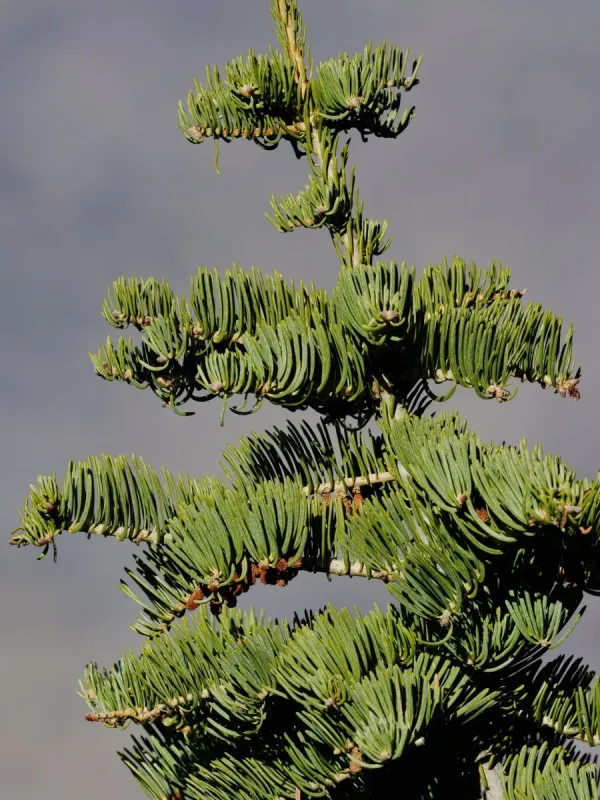
Description
Growing requirements
White fir (Abies concolor) is a prominent member of the Pinaceae family. It is native to the mountainous regions of Western North America and is widely appreciated for its symmetrical, conical growth habit.
The defining characteristic of this species is its long, soft, bluish-green needles that are uniform in color on both the upper and lower surfaces, which distinguishes it from many other fir species.
It is one of the most drought-tolerant firs available, making it an excellent candidate for various landscaping projects. It thrives in deep, well-drained, acidic to neutral soils and performs poorly in heavy clay or waterlogged areas.
For optimal growth, Abies concolor requires full sun exposure and ample space to develop its mature form. It exhibits high tolerance to cold climates, although protection from harsh winter winds is recommended for young specimens.
Maintenance involves mulching to retain soil moisture and applying a balanced fertilizer once per year in early spring to support vigorous growth and needle health.
Main diseases and pests
The most common pests affecting this species include the fir aphid and spider mites, which can cause significant needle discoloration if left unmanaged.
Fungal diseases such as needle cast and various types of rusts may occur, particularly in environments with limited airflow or excessive humidity during the growing season.
Management strategies focus on integrated pest control, including the application of dormant oil sprays and targeted fungicides when early symptoms are detected.
Proper site selection, which prevents water accumulation and provides adequate sunlight, remains the primary preventive measure against the development of most diseases.
Regular monitoring of the canopy and prompt pruning of any dead or dying branches help to maintain the overall vigor of the tree and reduce the risk of infestation.