
Grand fir
Abies grandis (Douglas ex D. Don) Lindl.
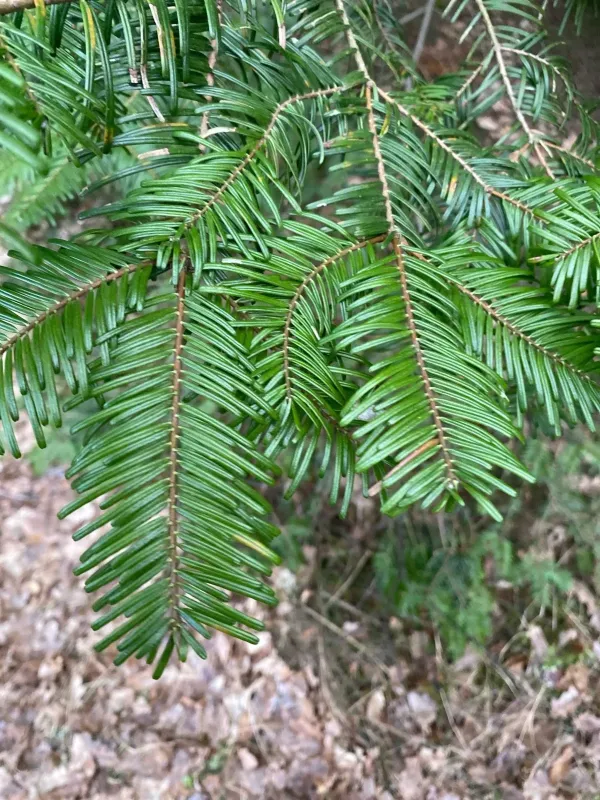
Description
Sowing dates
The Grand fir (Abies grandis) belongs to the Pinaceae family and is a prominent coniferous species. Propagation is primarily achieved through seeds, which require stratification in cool conditions to break dormancy and ensure high germination rates before sowing in nursery beds.
Sowing depth should be maintained at 1 to 2 centimeters in a well-prepared seedbed. Maintaining consistent moisture is critical, as seeds and young germinants are sensitive to environmental stress and dehydration during their early development stages.
Spring is the ideal season for sowing, typically when soil temperatures reach stable levels. Early establishment allows the young seedlings to develop sufficient root mass before the heat of summer, which improves their overall survival rate significantly.
Shading is a fundamental requirement for seedlings during the first two years of growth. Artificial or natural shade helps protect young foliage from intense solar radiation and reduces transpiration, promoting healthier, more vigorous growth.
After three to four years, the seedlings reach a stage suitable for transplanting into permanent plantation sites. Proper handling of the root ball during this process is essential to minimize transplant shock and encourage rapid establishment.
Growing requirements
The species flourishes in climates with high humidity, cool summers, and mild winters. It is highly intolerant of prolonged drought, making it unsuitable for dry inland regions without sufficient annual rainfall or humidity control.
Deep, fertile, and well-drained loamy soils are ideal for Grand fir. While it can adapt to various soil types, it is highly sensitive to waterlogged conditions, which can lead to root asphyxiation and increase the risk of pathogen infection.
It demonstrates excellent shade tolerance during its juvenile phase, which allows it to thrive in denser forest stands. However, as the tree matures, increased light exposure becomes necessary to maximize its height and diameter increment.
Protection from cold, drying winds is necessary to prevent winter burn on needles. Proper site selection, often focusing on sheltered valleys or northern slopes, is a key component of a successful plantation strategy.
Consistent soil management practices, including the maintenance of adequate nutrient levels and the application of organic matter, ensure the long-term vitality of the plantation and protect it against various environmental stressors.
Yield
Grand fir is renowned for its rapid growth rate, which is among the highest in the genus Abies. Under optimal growing conditions, it produces a significant volume of high-quality softwood in a relatively short rotation period.
The timber is widely used in construction, framing, and pulp production due to its straight grain and ease of workability. Its high biomass production makes it an economically viable choice for industrial forestry and sustainable timber harvesting.
In addition to timber, the species is a major contributor to the Christmas tree market. Its dark green, lustrous needles and uniform, conical shape are highly valued by consumers, creating a secondary revenue stream for tree farmers.
The ecological impact of Grand fir plantations is significant, as it effectively sequesters carbon and provides structural complexity to forest ecosystems. It acts as a vital component in land rehabilitation and soil stabilization projects.
Sustainable yield management requires periodic thinning to provide growing space for the best-performing trees. This practice balances the density of the stand with the biological needs of individual trees, optimizing both wood quality and output.
Main diseases and pests
Fungal diseases, particularly those affecting the roots and needles, are the primary biological threats. Pathogens like needle cast or root rot can cause significant economic losses if not managed with proactive silvicultural practices.
Insects such as the balsam woolly adelgid represent a severe threat to Grand fir plantations. These pests damage the cambium and foliage, significantly weakening the tree's health and making it susceptible to secondary infestations.
Bark beetles pose a risk to mature stands, especially those that are stressed due to drought or mechanical injury. Monitoring for entry holes and frass is an essential component of the plantation's health surveillance program.
Prevention of pest outbreaks is best achieved through maintaining optimal stand density and ensuring trees receive adequate nutrients. Stressed trees are invariably more susceptible to both insect attacks and opportunistic fungal infections.
- Sanitation: Prompt removal and destruction of infected individuals.
- Monitoring: Routine checks for pest activity and symptoms of disease.
- Control: Targeted application of integrated pest management (IPM) strategies.