
Momi fir
Abies firma Siebold & Zucc.
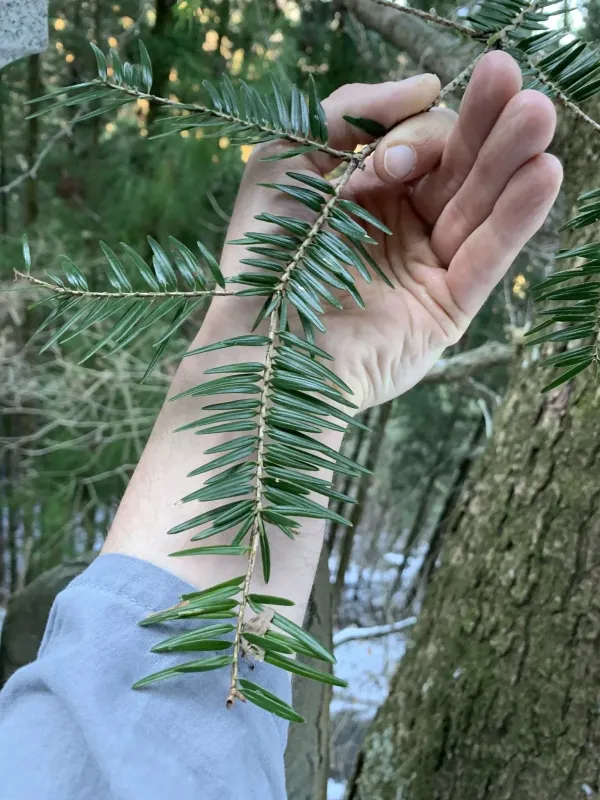
Description
Growing requirements
The Momi fir (Abies firma) is a large evergreen conifer belonging to the Pinaceae family. Native to Japan, it is highly regarded for its stature and durability in various forest ecosystems.
The species naturally occurs on the islands of Honshu, Shikoku, and Kyushu, where it thrives in warm-temperate and subtropical forests. It is best adapted to regions with mild winters and high humidity throughout the growing season.
It prefers deep, well-drained, and nutrient-rich soils. While it can adapt to various soil types, it performs best in slightly acidic, loamy conditions that maintain consistent moisture without being waterlogged.
Light requirements for the Momi fir vary with age; younger trees are notably shade-tolerant and can develop under a canopy, while mature specimens require full sun or partial shade to reach their full potential.
Agrotechnical care includes monitoring soil pH levels and ensuring adequate moisture during prolonged dry spells to promote deep root development and structural stability.
Harvesting
Economically, the Momi fir is valued in the timber industry for its wood, which is used in construction and the manufacturing of furniture due to its balance of weight and strength.
In landscaping, this species serves as a magnificent specimen tree. Its dense, dark green foliage and stately growth habit make it a preferred choice for large gardens and arboretums in temperate zones.
Seed harvesting involves collecting the cones just before they disintegrate. As the cones mature, they break apart while still on the tree, making it necessary to time the harvest accurately to secure the seeds.
Silvicultural management focuses on sustainable harvesting practices, including thinning operations that reduce competition between trees and promote the growth of higher-quality timber.
Protection of the species involves observing for potential fungal pathogens or insect pests that may affect the foliage, although Abies firma is generally recognized for its robust health under appropriate site conditions.