
Silver fir
Abies alba Mill.
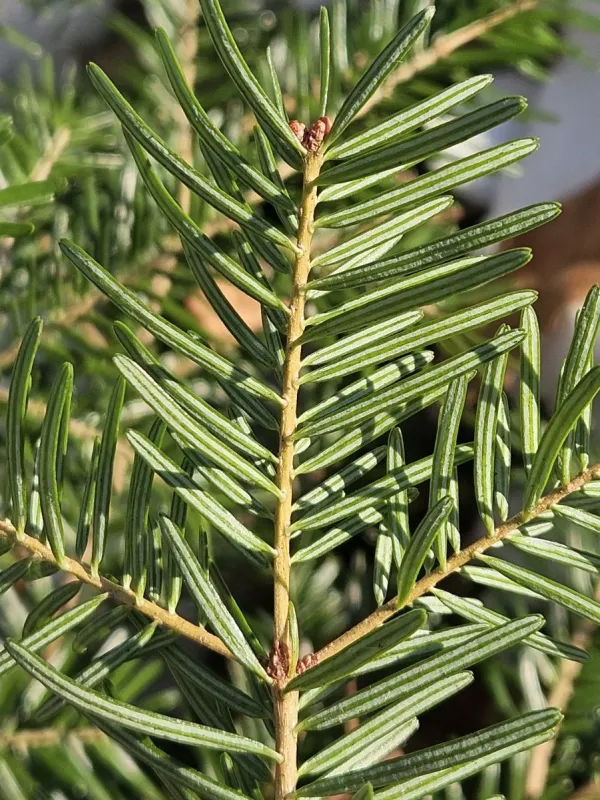
Description
Sowing dates
Propagation of Silver fir is primarily done through seeds in professional nurseries. Seeds are collected from mature cones and require cold stratification for several weeks before sowing to improve germination rates.
Sowing should take place in spring in well-prepared, loose soil. The seeds are buried to a depth of approximately 2 centimeters, and the seedbed must be kept consistently moist to ensure uniform emergence.
Seedlings are highly sensitive to strong sunlight during their first two years. Providing artificial shade is critical to prevent seedling burnout and ensure optimal establishment in the early stages.
Vegetative propagation via cuttings is possible but difficult, requiring high humidity and the application of rooting hormones. This method is usually reserved for specific cultivars to maintain genetic uniformity.
Young plants should be transplanted to their permanent locations after reaching an age of 5 to 7 years. Careful handling of the root ball is essential to minimize transplant shock and encourage root development.
Growing requirements
The Silver fir (family Pinaceae) is a noble coniferous species native to European mountain forests. It prefers a climate with cool, humid summers and moderate winters, as it thrives in high-moisture environments.
It demands deep, fertile, and well-drained loamy soils. The species is highly sensitive to soil compaction and waterlogging, which can inhibit oxygen access to the roots and lead to decline.
The tree is considered shade-tolerant, especially when young, which is an evolutionary adaptation for growth beneath the forest canopy. As it matures, it requires more light to maintain dense foliage.
Soil pH should ideally be slightly acidic, ranging from 5.5 to 6.5. Deviations from this range can affect nutrient uptake and lead to needle chlorosis, which stunts the overall growth of the tree.
Protection from cold, drying winds is necessary to prevent transpiration stress, particularly during late winter or early spring when the ground might still be frozen.
Main diseases and pests
Silver fir is susceptible to several pests, including the silver fir aphid, which causes needle drop and stunted growth. Infestations can be severe if not controlled during the early spring stage.
Fungal diseases like needle cast (shütte) are common, especially in dense or poorly ventilated plantings. These infections result in the browning and eventual fall of needles during the growing season.
Root rot, often caused by poor drainage, remains one of the most serious threats to the health of the stand. Mitigation involves improving soil structure and avoiding stagnant water around the root zone.
The balsam woolly adelgid and various bark beetles can target weakened trees. Regular monitoring for exit holes or resin bleeding is essential for early detection of wood-boring insects.
Integrated pest management, including pruning affected branches and using appropriate fungicides, helps maintain the health of the plantation without heavy reliance on chemical intervention.
Harvesting
The wood of the Silver fir is highly valued for construction, joinery, and the production of paper pulp. Its light weight and lack of resin ducts make it versatile for various indoor and outdoor uses.
In silviculture, thinning operations are performed to remove suppressed or diseased trees, allowing the remaining individuals more access to sunlight and soil nutrients for increased volume growth.
The species is also a staple in the ornamental industry, prized for its symmetrical silhouette and rich green foliage. It is often used in parks and large gardens as a focal point.
Medicinal applications of Silver fir include the extraction of essential oils from needles and young twigs, which are prized for their antiseptic and anti-inflammatory properties.
Seed harvesting from cones occurs before they disperse in the fall. After drying the cones, seeds are separated, cleaned, and stored in controlled, low-temperature conditions for future use.