
Cilician fir
Abies cilicica (Antoine & Kotschy) Carrière
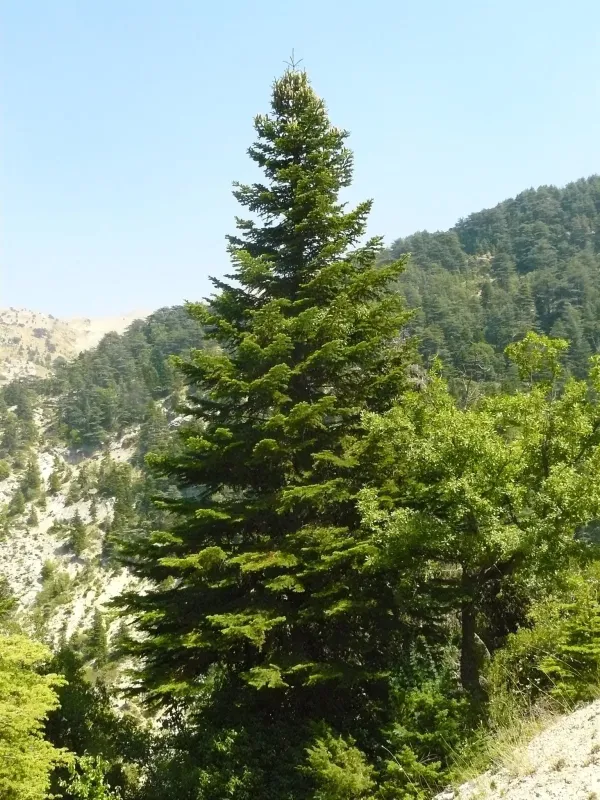
Description
Growing requirements
The Cilician fir (Abies cilicica) is a tall evergreen conifer belonging to the Pinaceae family, native to the Taurus Mountains of Turkey, Syria, and Lebanon. It is highly valued for its elegant, slender, conical habit.
In its native habitat, it grows at elevations ranging from 1,000 to 2,000 meters. The tree thrives in mountainous regions characterized by cool temperatures and significant rainfall throughout the growing season.
Regarding soil, the Cilician fir prefers deep, moist, well-drained, and nutrient-rich soils. It does not tolerate waterlogged conditions or sites prone to prolonged periods of drought, which can lead to canopy dieback.
Climate requirements include protection from desiccating winds and excessive heat. While young trees benefit from light shade, established specimens appreciate full sun to partial shade in temperate climates.
Proper site selection is crucial for commercial or ornamental success. The tree requires ample space to develop its full root system and should be planted in areas where the soil pH is slightly acidic to neutral.
Main diseases and pests
Common health issues for the Cilician fir include root rot and needle cast, which are typically triggered by poor drainage and excessive humidity in the root zone or the canopy.
Pests such as the balsam woolly adelgid (or related species) can cause significant damage by affecting the tree’s nutrient transport system and inducing malformation of the needles.
Bark beetles also pose a threat to weakened or stressed trees, especially those suffering from drought conditions or secondary infections after severe winters.
Good silvicultural practices, such as maintaining appropriate stand density and providing adequate watering during dry spells, are the best methods to ensure the tree's long-term health.
Regular monitoring of needles and bark is recommended to detect any pest or disease outbreaks early, allowing for timely application of targeted biological or chemical treatments.