
Greek fir
Abies cephalonica Loudon
Description
Growing requirements
Greek fir (Abies cephalonica) is an evergreen coniferous species belonging to the Pinaceae family, native to the mountainous regions of Greece. This tree is highly valued for its dense, conical habit and its ability to thrive in diverse mountain environments at altitudes ranging from 800 to 1,800 meters.
Regarding soil requirements, Greek fir prefers deep, moist, yet well-drained loamy soils. It is sensitive to soil compaction and waterlogging, which can lead to root rot; therefore, selecting a site with excellent natural drainage or installing an artificial drainage system is essential for successful establishment.
The tree thrives in Mediterranean climates but is known for its relatively good adaptability to different temperatures. It requires sufficient exposure to sunlight to maintain the integrity of its crown, although young trees benefit from partial shelter to protect them from harsh, drying winds.
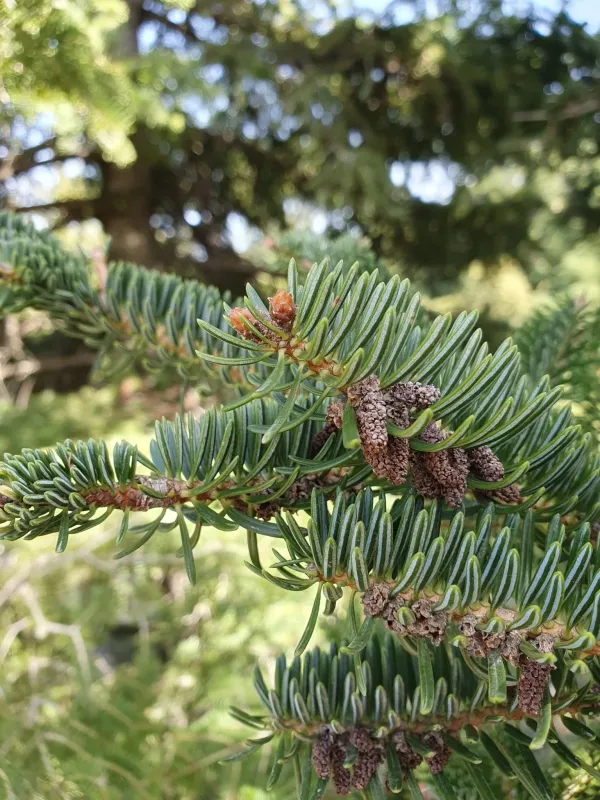
Botanically, this fir is distinguished by its stiff, dark green, pointed needles that are radially arranged on the branch. The cones are cylindrical, upright, and have characteristic reflexed bracts that distinguish them from other closely related fir species found in Europe.
In terms of land use, the Greek fir is a significant ornamental tree for large-scale landscaping and parks. Beyond its aesthetic appeal, it provides high-quality timber that is used in the construction industry, where its wood is prized for its durability and structural strength.
Main diseases and pests
The most common health issues for Greek fir involve fungal pathogens, such as needle cast diseases, which thrive in stagnant, humid air conditions. Maintaining proper spacing between trees to ensure good air circulation is a primary cultural method to prevent these infections.
Pest management focuses on controlling aphids and scale insects that can cause significant damage to the saplings and younger branches. Regular monitoring throughout the growing season and the application of integrated pest management practices are essential to keep the trees healthy and free from infestation.