
Pacific silver fir
Abies amabilis Douglas ex J. Forbes
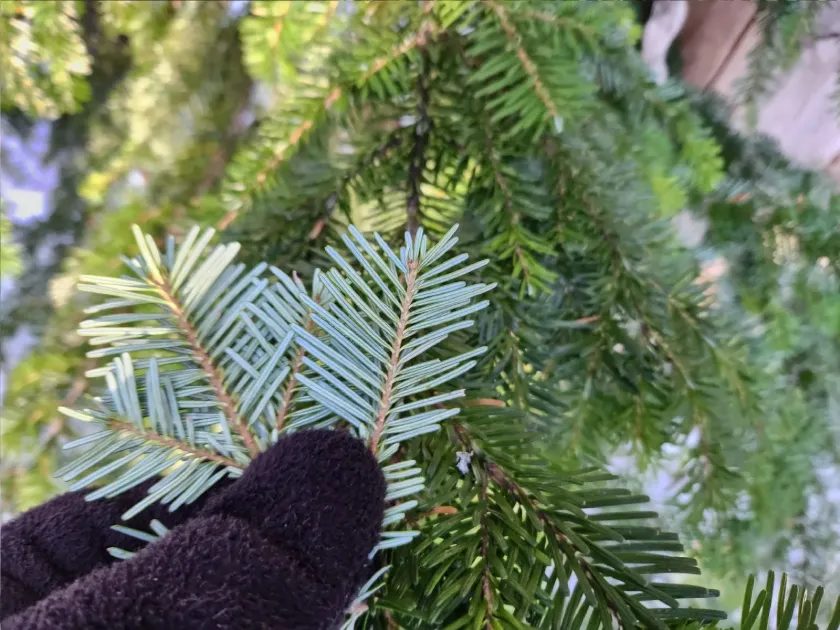
Description
Sowing dates
The Pacific silver fir (Abies amabilis) is a member of the Pinaceae family. In nature, it regenerates through seeds that require a period of cold stratification to break dormancy.
In nursery settings, seeds are typically sown in early spring after being stratified for 30 to 60 days. This process ensures high germination rates and uniform seedling growth.
Optimal planting occurs in the early spring, allowing the root systems to establish themselves in the soil before the stress of the summer season begins.
For container-grown stock, a well-draining, nutrient-rich substrate is essential to promote healthy root development and prevent early-stage damping-off diseases.
Planting density varies by management goal: higher densities are used for timber production, while wider spacing is preferred to encourage full foliage for the Christmas tree market.
Growing requirements
This species is native to the Pacific Northwest of North America, where it thrives in cool, moist climates characterized by heavy snowfall and mild, wet winters.
Pacific silver fir requires deep, well-drained, and nutrient-rich soils. It is particularly sensitive to waterlogged conditions, which can lead to root system failure.
The tree prefers acidic to slightly acidic soil profiles and performs best in regions with high atmospheric moisture, which mimics its natural coastal and subalpine habitats.
As a highly shade-tolerant species, it is capable of growing beneath a forest canopy, allowing for sustainable management practices and uneven-aged stand development.
It is well-adapted to high-altitude environments, exhibiting strong resistance to heavy snow loads due to its dense, flexible branch structure.
Yield
The Pacific silver fir is highly valued in the forestry industry for its lightweight, straight-grained wood, which is free of resin ducts and suitable for diverse construction applications.
It is widely used in the production of pulp, paper, and general-purpose lumber, thanks to its excellent machining properties and structural stability.
In landscaping, it is prized for its aesthetic appeal, featuring a narrow, conical silhouette, dark green needles with silvery undersides, and striking purple cones.
The species is increasingly cultivated as a premium Christmas tree, valued for its dense foliage, symmetrical form, and the long-lasting fragrance of its branches.
Well-managed stands can yield significant timber volume, provided the site conditions match the species' specific ecological needs for moisture and protection.
Main diseases and pests
Root rot pathogens, such as Armillaria species, represent a primary threat, especially in sites where soil drainage is inadequate or water stagnation occurs.
Insect pests, including the balsam woolly adelgid, can cause severe damage by feeding on the sap, leading to crown deformation and tree mortality in extreme cases.
Late spring frosts can damage newly emerging tender shoots, which negatively impacts the tree's growth rate and its commercial quality for decorative purposes.
Poor ventilation within dense plantations can increase susceptibility to fungal infections, requiring active monitoring and appropriate management of stand density.
Integrated pest management strategies, such as maintaining stand health and removing infected trees promptly, are critical to ensuring the longevity of Pacific silver fir stands.