
Vitis berlandieri x Vitis riparia x Vitis cinerea
Vitis berlandieri Planch. x Vitis riparia Michx. x Vitis cinerea Engelm.
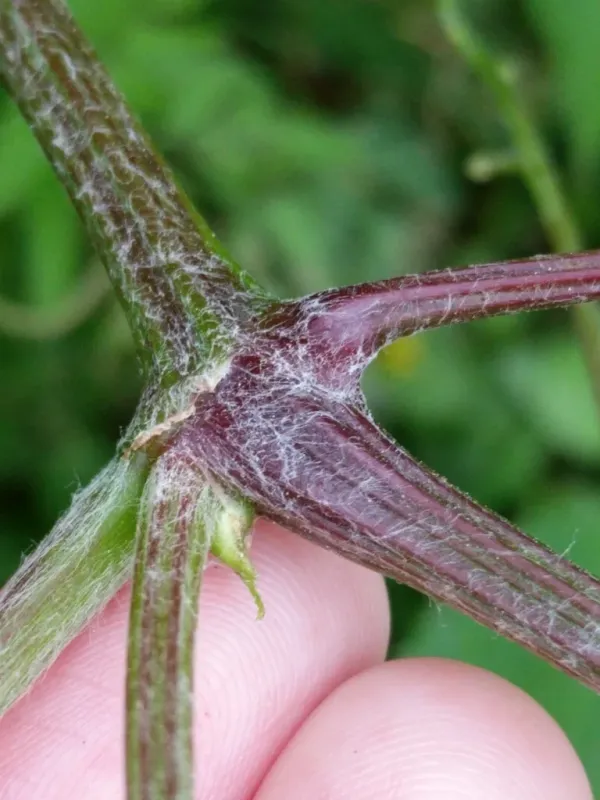
Description
Growing requirements
This interspecific hybrid represents a sophisticated combination of genetic material from three North American grape species: Vitis berlandieri, Vitis riparia, and Vitis cinerea. It is a perennial plant of the Vitaceae family, primarily used as a high-technology rootstock for cultivated grape varieties.
In their natural habitat, these source species thrive across North America, where they have adapted to challenging soil conditions, including high lime content and excessive humidity. The culture was intentionally developed by breeders to improve the adaptability of vineyard plantations to adverse soil factors.
The primary requirement for successful cultivation is well-drained but sufficiently moisture-retentive soil. The plant exhibits high resistance to chlorosis, attributed to the genetics of Vitis berlandieri, which tolerates significant active lime content in the soil without impairing photosynthesis.
The hybrid's root system is characterized by robust development and vigorous growth, allowing grafted vines to rapidly accumulate vegetative biomass. The plant is highly demanding of heat during the growing season and possesses moderate frost resistance, typical of species adapted to temperate climates.
Cultivation techniques require strict adherence to irrigation schedules during the first few years of the sapling's life to encourage deep root formation. With proper care, the vine demonstrates excellent compatibility with scions, ensuring the longevity and productivity of commercial vineyards.
Main diseases and pests
The main advantage of this hybrid is its pronounced resistance to phylloxera, a critical pest for most European grape varieties. The genetic legacy of the American species allows the root system to withstand damage inflicted by this insect.
The plant shows relative resistance to fungal diseases such as downy mildew and powdery mildew, thanks to the specific structure of its leaves and epidermis. However, in conditions of high humidity without adequate aeration, localized damage to the foliage can occur.
It is crucial to monitor for nematodes, as the hybrid's root system can be affected if crop rotation practices are not followed on the site. Timely preventive fungicide treatments and the use of clean planting material remain industry standards in nursery management.
Despite its high vitality, the crop may suffer from micronutrient deficiencies if soil pH levels exceed the specific tolerance thresholds of the rootstock. Regular soil analysis allows for the precise adjustment of mineral nutrition to maintain vine health.
Pests like spider mites rarely pose a significant threat to the robust bushes of this rootstock; however, in cases of severe infestation, specific acaricides should be applied to prevent the inhibition of shoot development.