
European dewberry
Rubus caesius L.
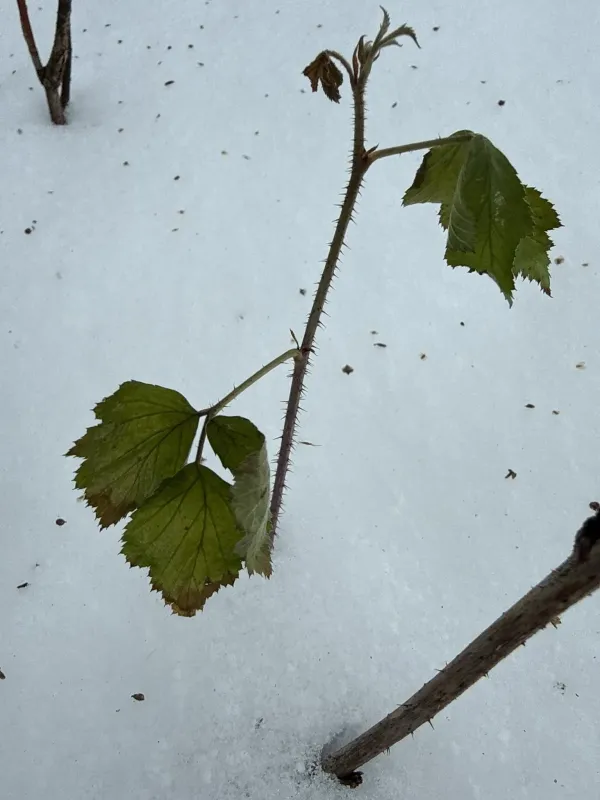
Description
Growing requirements
The European dewberry (Rubus caesius L.) is a perennial subshrub belonging to the Rosaceae family. It is distinguished by its trailing, glaucous stems covered with small prickles, often forming dense thickets in its natural environment.
The species is native to a broad range of regions across Europe, Central Asia, and parts of the Caucasus. It thrives in humid habitats such as riverbanks, forest edges, and shrublands where the soil is rich in organic matter and moisture.
For commercial cultivation, the plant requires sunny locations with protection from strong prevailing winds. It is a hardy species, but it benefits significantly from well-drained, fertile, neutral to slightly acidic soils that retain sufficient water.
Water management is critical during the fruit development stage. Excessive soil moisture can lead to root rot, so proper drainage systems are essential to maintain plant health and vigor in intensive farming setups.
Cultivation practices involve regular pruning of biennial canes that have finished fruiting, allowing for the healthy development of new shoots. Providing structural support, such as trellises, can improve air circulation and sunlight exposure.
Yield
The yield of the European dewberry can be substantial when managed under proper agricultural conditions. While wild populations often produce moderate crops, controlled cultivation allows for better plant development and higher fruit output.
The fruits are aggregate drupes characterized by their characteristic bluish waxy bloom, which gives the plant its scientific and common name. They are highly prized for their unique sweet-tart flavor profile and aromatic qualities.
Economically, the berries are utilized in the production of high-quality jams, juices, wines, and fresh market sales. The leaves are also used in traditional herbal medicine, primarily for their astringent properties.
The market value is supported by the growing interest in nutrient-dense superfoods. European dewberries are rich in antioxidants, vitamins, and minerals, making them an attractive option for health-conscious consumers.
Regular fertilization with organic compost and balanced mineral supplements promotes stronger plant growth and higher fruit density, directly impacting the overall productivity per hectare of the plantation.
Main diseases and pests
The plant is susceptible to various fungal diseases, including rust and septoria leaf spot, which can severely damage foliage. Maintaining good airflow by proper spacing is one of the best preventative measures.
The blackberry mite is a significant pest that can affect fruit quality, causing the drupelets to remain hard and bitter. Monitoring for aphids and beetle infestations during the flowering stage is essential for maintaining crop integrity.
Chemical control, when necessary, should be applied with caution, favoring products that are safe for pollinators. Integrated Pest Management (IPM) is strongly recommended to maintain a balanced ecosystem within the farm.
Sanitation is key in disease control; pruning and destroying infected canes at the end of the season prevents the overwintering of pathogens. Keeping the plantation free of weeds also reduces the reservoir for pests.
Regular monitoring and early detection of symptoms allow growers to manage outbreaks effectively before they spread across the plantation, protecting the overall health of the crop.
Harvesting
Harvesting European dewberries is a delicate, labor-intensive process that requires careful timing. The berries ripen unevenly, necessitating multiple passes throughout the ripening season to gather fruit at its peak quality.
Berries should be picked individually, ensuring they are fully mature and show a consistent black color with the characteristic glaucous bloom. Avoid applying pressure, as the fruits are extremely perishable and bruise easily.
Post-harvest handling is critical for maintaining quality. Berries should be placed in shallow, ventilated containers and moved to a cool, shaded environment as quickly as possible to inhibit spoilage and maintain freshness.
Transportation of the fruit must be handled with care to prevent damage to the delicate drupelets. Using specialized packaging that minimizes vibration helps preserve the appearance and texture of the berries.
Because the fruit has a limited shelf life, immediate processing or distribution is necessary. Efficient logistics and cold chain management are fundamental to maximizing profitability in European dewberry production.