
Allegheny blackberry
Rubus allegheniensis Porter
Description
Growing requirements
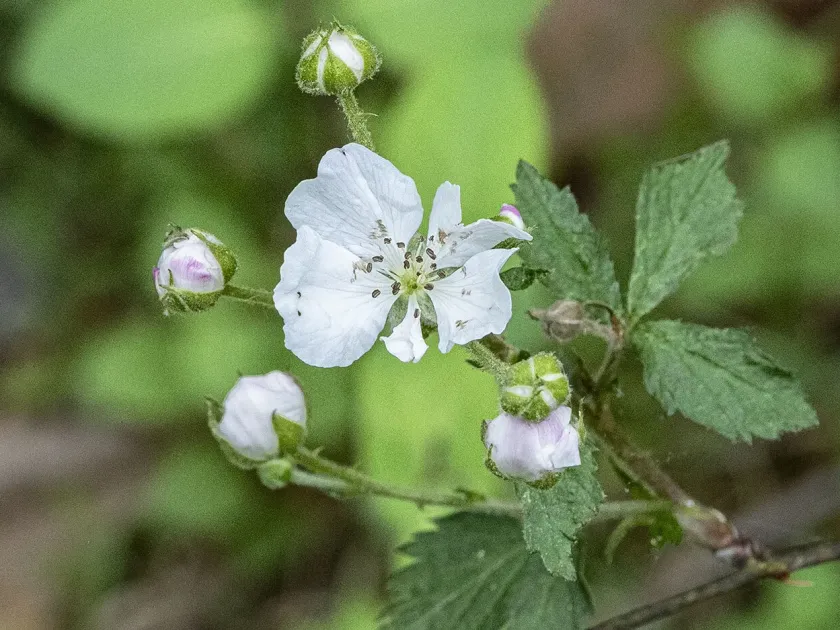
The Allegheny blackberry (Rubus allegheniensis) is a perennial shrub belonging to the Rosaceae family, native to North America. It is characterized by its arching, thorny canes that are biennial in nature, meaning they grow in the first year and produce fruit in the second year before dying back.
To thrive, this plant requires deep, well-drained, and nutrient-rich soil with a slightly acidic profile. It performs best in areas with full sun exposure, although it can tolerate partial shade. Proper soil moisture is critical for fruit development, making well-drained but moisture-retentive soil essential.
Cultivation practices involve installing trellis systems to support the canes, which helps maximize air circulation and prevents berries from touching the ground. Consistent pruning is necessary to remove dead wood and encourage the growth of vigorous new canes for the next season's production.
The species is well-adapted to cooler climates, showing significant hardiness compared to other blackberry varieties. However, in regions with very harsh winters, providing some form of wind protection can help prevent winter injury to the tips of the canes, ensuring better spring growth.
Allegheny blackberries are highly valued for their intense flavor and nutritional density, containing high levels of vitamins and antioxidants. They are primarily used for fresh consumption, baking, preserves, and the production of artisan fruit wines, supporting local market demand.
Main diseases and pests
Common pathological threats include orange rust and anthracnose, which are fungal diseases that thrive in high humidity conditions. Managing plant spacing and ensuring good airflow are the primary methods for preventing these diseases from devastating the plantation.
Pests such as the red-necked cane borer and various aphid species pose a risk to the plant's health by damaging canes or transmitting viral infections. Growers often employ integrated pest management (IPM) strategies, which prioritize early detection and the removal of infested canes.