
Starry arctic raspberry
Rubus arcticus L. subsp. stellatus (Sm.) B. Boivin
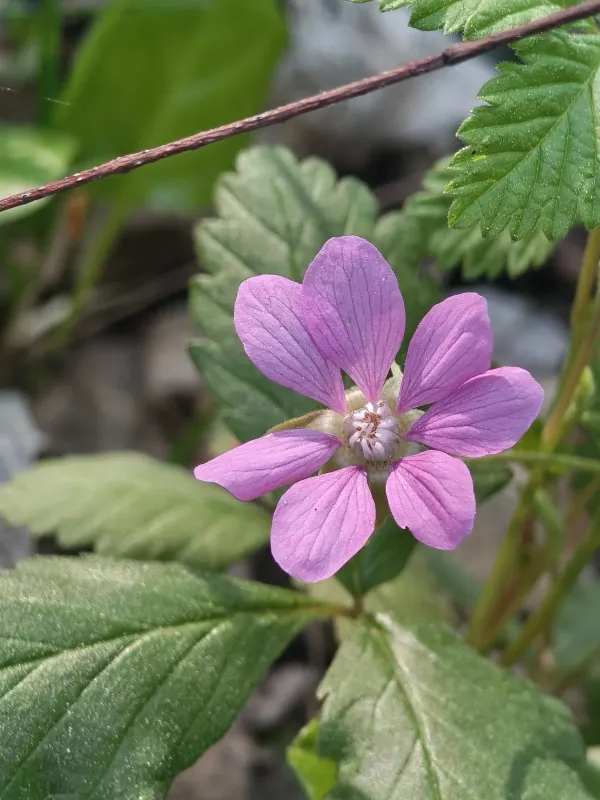
Description
Sowing dates
Propagation is primarily vegetative through rhizome division or utilizing stolons during the early spring or late autumn seasons. Proper spacing is essential to ensure adequate airflow, which prevents the development of fungal pathogens and promotes uniform growth across the plantation.
Growing requirements
Starry arctic raspberry (Rubus arcticus subsp. stellatus) is a perennial herbaceous plant belonging to the Rosaceae family. It is distinct for its star-shaped leaves and is widely recognized as a botanical sub-species of the Arctic raspberry, native to Alaska and the Pacific Northwest.
This crop thrives in cool, moist environments and is naturally adapted to subarctic and temperate maritime climates. It prefers acidic soil conditions, typically rich in organic matter like peat, which mimics its native tundra and boreal forest habitats.
Agronomic requirements include constant soil moisture throughout the growing season. The plant has a shallow root system, making it vulnerable to drought and requiring consistent irrigation in intensive farming scenarios to maintain healthy vegetative development.
Cultural management involves providing adequate shade to prevent heat stress during peak summer months. Given its cold hardiness, the crop requires no specific winter protection, allowing it to survive extreme temperature drops common in northern latitudes.
The economic value of this crop lies in its aromatic, flavorful berries, which are highly prized for gourmet food products. The unique chemical profile and taste make it an excellent candidate for specialized fruit production in cooler climatic zones.
Yield
Yield stability depends heavily on cross-pollination between different genetic clones, as the starry arctic raspberry is essentially self-infertile. Growers should implement multi-clone planting strategies to ensure high fruit set and consistent annual yields.
Main diseases and pests
Common phytosanitary concerns include gray mold and root rots, particularly in poorly drained soils. Pests such as aphids and small fruit beetles can compromise foliage health, necessitating integrated pest management programs that prioritize minimal chemical intervention.
Harvesting
Harvesting is labor-intensive because the berries reach maturity at different times and are highly perishable. Berries must be picked manually during the cool hours of the day to ensure optimal shelf life and to preserve their delicate texture for market sale.