
Pistacia vera
Pistacia vera L.
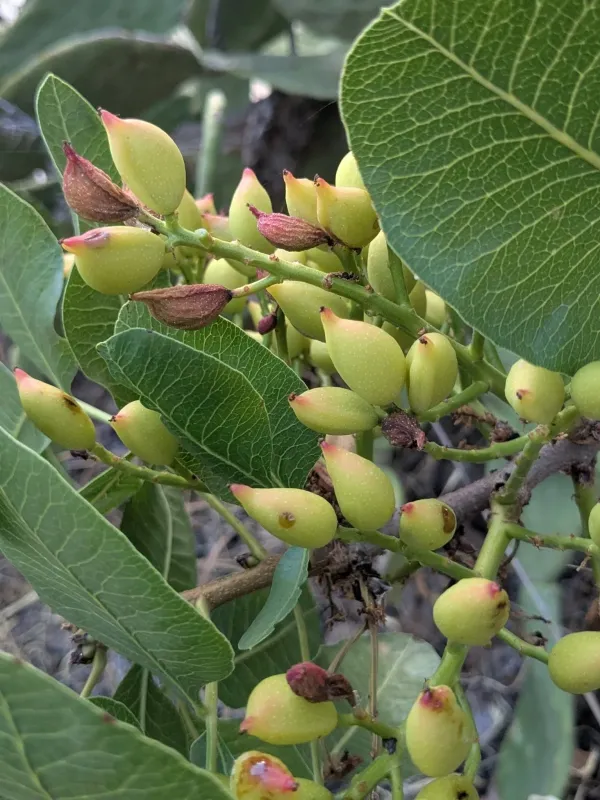
Description
Sowing dates
Pistacia vera L., a member of the Anacardiaceae family, is predominantly propagated through vegetative methods, specifically grafting selected cultivars onto robust rootstocks grown from seeds. Rootstock seeds are typically sown in autumn or stratified before spring sowing.
For establishing commercial orchards, it is crucial to select certified, disease-free nursery saplings with well-developed root systems. Planting occurs during the tree's dormancy period, generally in early spring before the onset of sap flow, ensuring the tree establishes before the heat arrives.
Pistachios are dioecious plants, necessitating careful planning for pollination. It is essential to include male trees in the orchard layout at a ratio of approximately 1 male tree for every 8–10 female trees to ensure adequate wind-driven cross-pollination.
The planting density is dictated by the intended canopy management and irrigation system. In modern high-density orchards, spacing typically ranges from 5–6 meters between rows and 3–4 meters between individual trees, facilitating mechanization and canopy maintenance.
Young saplings require focused care, including supplemental irrigation during the initial years of growth, as their developing root systems cannot yet access deep groundwater, regardless of the adult tree's natural drought tolerance.
Growing requirements
Pistacia vera is a classic xerophytic species, native to the arid regions of Central Asia and the Middle East. It is evolutionary adapted to hot, dry summers and cool, mild winters, thriving in areas with low humidity.
Successful cultivation requires soils with deep water tables, as the tree is highly intolerant of waterlogging and soil salinity. Well-draining, calcareous, rocky, or loamy soils are ideal for ensuring proper root aeration and healthy development.
The tree is extremely heliophilous; any degree of shading significantly reduces photosynthetic efficiency and yield potential. High atmospheric humidity is detrimental, as it promotes the proliferation of various fungal pathogens.
Temperature thresholds are critical for this species. While mature trees can withstand cold temperatures down to -25°C, they are vulnerable to late spring frosts during the flowering stage. A long, hot growing season is necessary to ensure fruit maturity.
Modern commercial pistachio farming relies heavily on drip irrigation systems. Controlled water delivery during specific phenological stages of development significantly boosts both the quantity and quality of the nut harvest.
Yield
The economic value of pistachio orchards is rooted in the longevity of the trees, which can remain productive for over 100 years. However, commercial production typically begins only 7–10 years after initial planting.
Yield capacity varies significantly based on variety, rootstock, and management practices. On average, intensive orchards can produce between 1.5 to 3 metric tons per hectare, though growers must manage the inherent biological alternate-bearing cycle.
Advanced agricultural practices, including precise nutrient management and irrigation, help mitigate the severity of alternate bearing, ensuring more consistent production cycles and stable income streams for the agricultural enterprise.
Pistachio kernels are highly prized for their content of healthy fats, proteins, and antioxidant compounds. They are a staple in global confectionery and food processing, while also finding applications in the pharmaceutical and cosmetic industries.
The primary index of harvest quality is the degree of natural hull splitting on the tree, which indicates optimal nut maturity. Closed nuts are generally diverted for specific industrial processing or roasting purposes.
Main diseases and pests
Pistacia vera is susceptible to various fungal pathogens, often triggered by management errors or unfavorable climatic shifts. Significant diseases include Alternaria blight, Verticillium wilt, and gray mold, which damage foliage and fruit.
Root systems are occasionally compromised by Rhizoctonia and Sclerotinia under conditions of excessive moisture. Additionally, outbreaks of leaf spot and Septoria can lead to premature defoliation and weakened tree vigor.
Rust disease poses a persistent threat to orchard health, potentially reducing the photosynthetic canopy area and decreasing fruit bud initiation for the following season. Regular monitoring and timely application of systemic fungicides are recommended.
Common pests include the pistachio psyllid and various fruit worms, which cause direct damage to young shoots and maturing nuts. Integrated Pest Management (IPM) strategies are vital to protect the orchard from quality degradation.
Sanitation practices are essential for disease control: removing dead or infected wood, controlling weeds that harbor pathogens, and ensuring proper air circulation within the canopy are key to maintaining a resilient orchard.
Harvesting
Timing the harvest is critical; nuts are collected when the epicarp becomes soft and easily detachable, and the shell naturally splits open. Delaying the harvest risks significant yield losses due to premature dropping.
Commercial harvesting is typically mechanized using specialized tree shakers that gently vibrate the trees, causing the nuts to fall onto catching frames. It is vital to use equipment that does not damage the bark or skeletal structure.
Immediate processing is required post-harvest to remove the epicarp, preventing staining of the shell and potential rot. This removal process should ideally be completed within 24 hours of collection to ensure top-tier nut quality.
Subsequent drying is essential, either in climate-controlled dryers or through sun-drying, to reduce moisture levels to approximately 5–7%. This reduction is vital for safe, long-term storage without compromising flavor or chemical composition.
Storage must occur in cool, dry, and well-ventilated environments. Avoiding direct sunlight and high humidity prevents the oxidation of fats and maintains the natural color of the kernels, ensuring the product meets market standards.