
Mount Atlas mastic tree
Pistacia atlantica Desf.
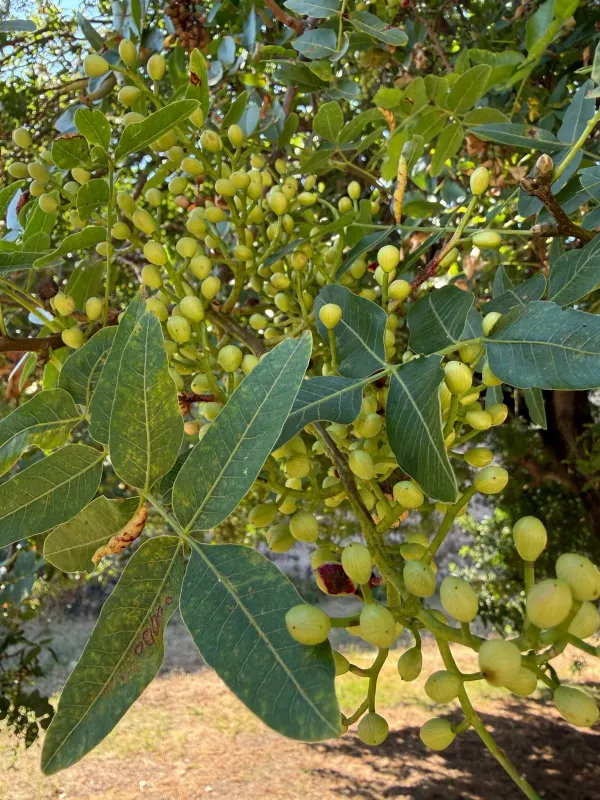
Description
Growing requirements
The Mount Atlas mastic tree (Pistacia atlantica Desf.) is a hardy, deciduous tree species belonging to the Anacardiaceae family. It is widely recognized for its remarkable resilience and longevity, capable of reaching significant ages and developing a deep, expansive root system.
Native to North Africa, the Middle East, and parts of Southern Europe, this species is well-adapted to arid and semi-arid environments. It thrives in regions with intense heat and can tolerate mild winter frosts, making it a critical species for reforestation and combating desertification.
The tree requires well-drained, porous soils, such as rocky or sandy substrates. It shows excellent performance in nutrient-poor soils where other fruit trees would struggle to survive, demonstrating high efficiency in water and mineral uptake.
Agricultural management is relatively low-input once the trees are established. They require full sun exposure and do not tolerate waterlogging. Irrigation is generally unnecessary in mature trees, as they are adapted to limited annual rainfall patterns.
In agriculture, the primary economic value of Pistacia atlantica lies in its utility as a rootstock. It provides superior graft compatibility for the edible pistachio (Pistacia vera), granting the scion increased cold hardiness and improved tolerance to poor soil conditions.
Main diseases and pests
The most common pests affecting this species are psyllids, which induce the formation of galls on the leaves and young stems. These galls can reduce the photosynthetic capacity of the tree and, in severe cases, cause premature leaf drop.
Fungal pathogens, such as leaf spot diseases or root rot, are typically associated with poor drainage or excessive humidity in the root zone. Ensuring sufficient spacing between trees and maintaining proper air circulation are key preventative measures.
Boring insects, including various species of bark beetles, may infest the trunks of stressed trees. Maintaining tree health through balanced nutrition and avoiding mechanical damage to the bark are the best ways to deter these pests.
Young plants are particularly vulnerable to browsing by rodents and livestock. Protective enclosures are recommended during the first years of growth to prevent bark destruction, which can lead to structural weakness or the death of the tree.
Integrated pest management strategies focusing on cultural practices, such as pruning infected branches and controlling weed density, are preferred over chemical treatments to maintain the ecological integrity of the planting site.