

Description
Sowing dates
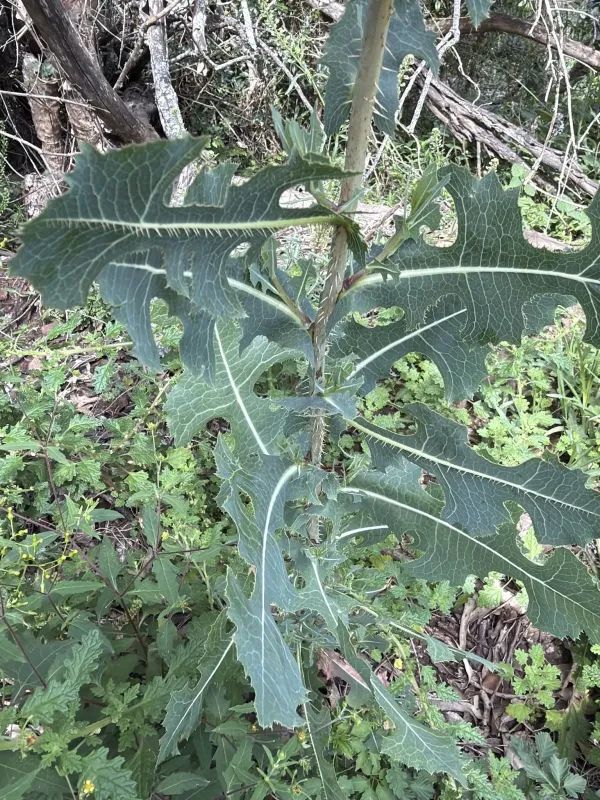
Prickly lettuce is an annual or biennial plant that reproduces exclusively through seeds. Germination typically begins in early spring as soil temperatures reach 8–10 degrees Celsius.
Seedlings emerge unevenly throughout the season, which complicates control efforts in agricultural fields. Optimal germination conditions generally occur during April and May when topsoil moisture is sufficient.
During dry summers, seeds can remain viable in the soil for several years. The germination depth is typically between 0.5 and 3 centimeters, characteristic of many species in the Asteraceae family.
The rosette stage becomes prominent in late spring, coinciding with the active growth phase of winter and spring cereal crops. Regular field scouting is essential during this development phase.
New flushes of seedlings can appear throughout the growing season following significant rainfall. This trait makes the plant a highly competitive weed in row crops.
Growing requirements
The plant prefers well-lit areas and rarely thrives under heavy shade. Prickly lettuce has significant nutrient requirements, particularly regarding nitrogen and potassium availability in the soil.
It performs best on fertile, loamy, or sandy-loam soils with a neutral or slightly alkaline pH. It tolerates soil compaction relatively well but is sensitive to prolonged waterlogging.
Originating from the Mediterranean region and Western Asia, the plant has successfully naturalized across Europe, North America, and Australia. It is highly adaptable to various climatic zones.
Temperate climates provide ideal conditions for the propagation of Lactuca serriola. The plant exhibits high drought resistance due to a robust taproot that penetrates deep into the soil profile.
Effective management includes maintaining a strict crop rotation and utilizing deep plowing techniques to bury seeds, which prevents successful germination at the surface.
Main diseases and pests
Prickly lettuce serves as a significant reservoir host for numerous agricultural pests and plant pathogens. Its presence increases the risk of infestation for both vegetable and grain crops.
Powdery mildew is frequently observed on the leaves of the plant; under favorable conditions, this fungus can easily spread to cultivated lettuce and other related crops.
The weed attracts various sap-sucking insects, such as aphids, which are primary vectors for plant viruses, including the Lettuce Mosaic Virus (LMV).
Rust fungi often infect the aerial parts of the plant during the mid-to-late summer period. These pathogens can persist on plant debris, contributing to long-term disease pressure in fields.
To minimize phytosanitary risks, it is highly recommended to eliminate the weed before the flowering and seed-set stages, especially in non-cropped field margins.
Content graph
Connections · Prickly lettuce
Most often together:
Marketplace
Products · 9

Trimer
Цзянсуський завод отрутохімікатів «Жуй Бан», Джітан , Китай.
Herbicides
0
0
·
1.6K
1 offer
85.35 €per pack
Buy


CUKRON + V.R., (CLOPIRACLID, 300 G/L)
Sunrise Agrochemical Co., Ltd.
Herbicides
0
0
·
44
2 offers
22.76 €per 1 l
Buy


Sniper, w.r., Cloquaralid, 300 g/l
Jiang'an Agrin Company Ltd.
Herbicides
0
0
·
30
No offers
—
Details