
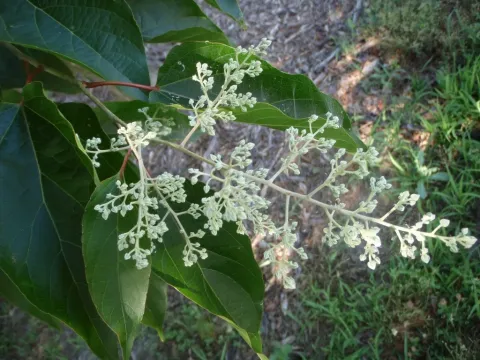
Poliothyrsis
Poliothyrsis
Poliothyrsis is typically propagated via seeds, which require stratification to break dormancy. Seeds should be kept in cold, moist conditions at temperatures around 4°C for approximately two months prior to sowing.
What the section contains

Poliothyrsis
Sowing should take place in spring in a well-draining seed mix. The seeds should be covered with a fine layer of substrate and placed in a location with consistent temperature to ensure uniform germination.
Vegetative propagation via softwood or semi-hardwood cuttings is another viable method. These cuttings are best taken in mid-summer and placed in a high-humidity environment with bottom heat to encourage rooting.
Young seedlings require gentle handling during transplanting to avoid damaging the delicate root system. It is advisable to grow them in containers for the first two years to monitor their health.
Establishing young trees in the permanent site requires careful site preparation and a consistent watering schedule during the first growing season to ensure the roots become well-anchored in the soil.
Poliothyrsis sinensis is a deciduous tree belonging to the Salicaceae family. Native to the forests of China, it is characterized by its elegant form and impressive, long-lasting clusters of flowers.
The tree thrives in fertile, loamy, and well-drained soils. While it can adapt to various soil types, providing high organic matter content through composting will significantly enhance growth and vigor.
It prefers a location with partial shade or full sun, provided there is protection from drying winds. In its native habitat, it grows in protected woodland areas, suggesting that it performs best in a sheltered garden setting.
Climate-wise, Poliothyrsis is moderately hardy but benefits from protection during extreme winter temperatures in northern regions. Mature trees are more resilient but still prefer a sheltered position.
Regular irrigation is essential during dry spells, particularly for younger specimens, to maintain leaf turgor and support overall physiological functions in the tree.
Poliothyrsis is primarily cultivated as an ornamental specimen in botanical gardens and private arboretums. Its main appeal lies in its late-summer blooming period, which adds structural beauty to the garden.
The inflorescences, appearing as terminal panicles of small, creamy-white flowers, provide a subtle but distinct visual interest that complements other late-blooming flora.
Seed harvesting occurs in late autumn when the capsules ripen and turn brownish. The seeds are extracted by drying the capsules in a controlled environment, which triggers the release of the contents.
Though not commonly harvested for timber, the plant's wood is occasionally used in specialized woodworking projects due to its density and grain, though this remains an niche use.
The aesthetic value of the tree is the primary factor for its inclusion in modern landscape designs, where it serves as a sophisticated focal point for late-season garden interest.
The tree is generally robust but can suffer from issues related to improper drainage, such as root rot. Ensuring good soil structure is the most effective preventative measure against such conditions.
Fungal leaf spots and powdery mildew can occur, especially in areas with stagnant air. Providing adequate spacing and pruning to open the canopy helps mitigate the risk of these common pathogens.
Pests like aphids or scale insects may target the tender new growth. Regular scouting is recommended to catch infestations early, allowing for targeted treatment before damage becomes significant.
Maintaining tree vigor through appropriate fertilization and timely watering is the best defense against environmental stress and pest outbreaks.
- Improving air circulation in the canopy.
- Monitoring soil moisture levels consistently.
- Applying systemic insecticides if pest populations surge.
- Pruning out diseased or dead wood during the dormant season.