
Populus generosa
Populus generosa
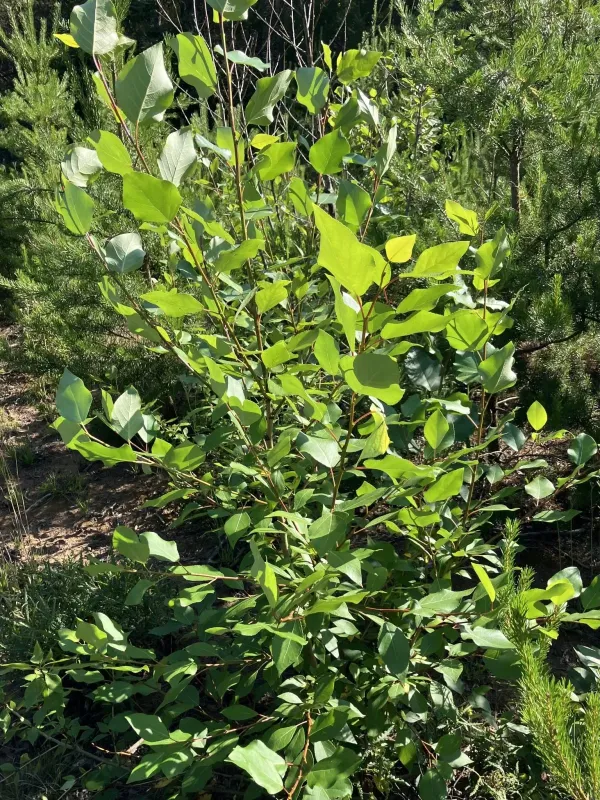
Description
Growing requirements
Populus generosa is a high-performance interspecific hybrid poplar belonging to the Salicaceae family. It was developed to achieve superior growth rates and biomass yields, making it a staple in intensive short-rotation forestry projects.
The culture thrives in deep, well-drained, and nutrient-rich soils. While it tolerates various soil types, alluvial deposits with high moisture retention capacity provide the best environment for rapid wood development.
Water management is essential, especially during the establishment phase. Adequate soil moisture must be maintained throughout the growing season to prevent drought stress, which can lead to permanent growth retardation.
Cultivation practices involve site preparation including deep tilling and control of invasive weeds to eliminate resource competition. Planting density is calculated based on the intended rotation cycle, allowing sufficient canopy space for optimal photosynthetic activity.
Beyond wood production, Populus generosa is used for windbreaks and phytoremediation projects due to its massive root system and high transpiration rates. It is a vital component in modern sustainable bio-economy strategies.
Main diseases and pests
Fungal diseases, particularly rust and canker, represent the primary health concern for Populus generosa plantations. These pathogens are most prevalent in humid climates with limited airflow between tree rows.
Insect pests, such as leaf beetles and wood-boring larvae, can cause significant damage to foliage and internal wood structures. Early detection through regular field scouting is critical to implementing effective control strategies.
Defoliation by pests significantly weakens the trees, making them more susceptible to opportunistic secondary infections. Maintaining optimal stand vitality is the first line of defense against pest-related losses.
Management strategies involve selecting site-specific clones that demonstrate inherent resistance to prevalent regional pathogens. Additionally, ensuring proper tree spacing prevents the microclimatic conditions that favor fungal outbreaks.
Integrated pest management (IPM) practices, including the use of pheromone traps and selective biocontrol agents, are preferred over broad-spectrum pesticides. Sustainable health management ensures the long-term profitability of the plantation.