
Ugni candollei
Ugni candollei
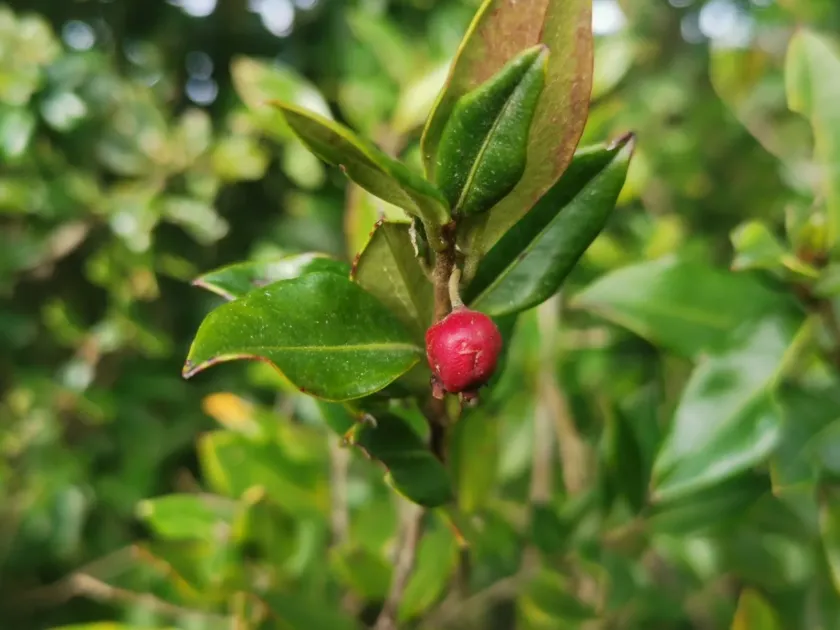
Description
Growing requirements
Ugni candollei is an evergreen shrub that belongs to the Myrtaceae family. This species is native to the humid forests of South America, where it thrives in mild and stable environmental conditions.
The plant is sensitive to frost and requires a temperate or subtropical climate to flourish. In regions with harsh winters, it is typically grown in containers to allow for indoor protection during the colder months of the year.
Cultivation requires well-drained, fertile soil with a slightly acidic pH. Poor drainage can lead to root rot, so incorporating organic matter and sand into the planting site is essential for proper development.
The ideal planting site provides filtered sunlight or partial shade. Excessive exposure to direct, scorching sun during the heat of the day can cause leaf scorch, especially in younger or newly established plants.
Regular maintenance involves consistent watering to keep the substrate moist but not waterlogged. Periodic fertilization with balanced, lime-free nutrients is recommended to support continuous growth and fruit production.
Yield
The primary agricultural interest in this species is its edible fruit, which features a pleasant, aromatic flavor profile. These berries are often used for fresh consumption or in artisanal food production.
Besides its culinary applications, the plant serves as a beautiful ornamental addition to gardens. Its glossy, deep green foliage and delicate blossoms make it a popular choice for structured landscape gardening.
Main diseases and pests
Fungal pathogens pose the most significant risk to the plant, particularly when humidity levels are too high or airflow is restricted. Proper spacing and pruning techniques help minimize these environmental risks.
Pests such as spider mites and mealybugs can affect the plant, especially in greenhouse or indoor environments. Integrated pest management strategies, including biological control or soap-based sprays, are effective treatments.
Harvesting
Harvesting should occur when the fruits reach full maturity and display their characteristic color. Given their delicate nature, the berries require careful handling to preserve their quality for storage or market.