
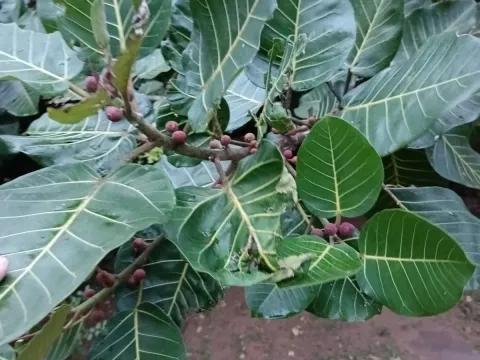
Ficus trichopoda
Ficus trichopoda
Ficus trichopoda belongs to the Moraceae family and is an evergreen tree or large shrub native to tropical Africa and Madagascar, thriving in humid environments.
What the section contains
Ficus trichopoda
This species is highly adapted to aquatic or semi-aquatic conditions, often found in swamp forests, riverbanks, and areas prone to seasonal flooding where moisture levels remain consistently high.
The plant requires a strictly tropical climate with consistent temperatures throughout the year, as it lacks cold tolerance and exhibits poor growth responses in temperate or cool environments.
Soil requirements for Ficus trichopoda include fertile, moisture-retentive substrates that provide good aeration while maintaining the high water content necessary for its root system.
Cultivation success depends on preventing desiccation, meaning that irrigation must be frequent and consistent, especially when the plant is grown outside of its natural high-humidity swamp habitats.
Economic uses of Ficus trichopoda include the utilization of its wood for local construction and fuel, provided that harvesting is managed through sustainable silviculture practices.
Traditional medicine in its native range uses extracts from the bark and the milky latex for treating skin ailments and inflammatory conditions, reflecting the cultural value of this plant.
The syconia, or fruit, serve as a vital food source for avian and primate species, which highlights the ecological importance of Ficus trichopoda in maintaining tropical forest biodiversity.
In terms of environmental engineering, the plant is valued for its ability to stabilize shorelines and prevent erosion in riparian zones, protecting sensitive agricultural land from water damage.
Harvesting strategies should prioritize ecological stability by ensuring that the removal of plant biomass does not interfere with the natural regeneration cycle of these valuable swamp forest communities.