
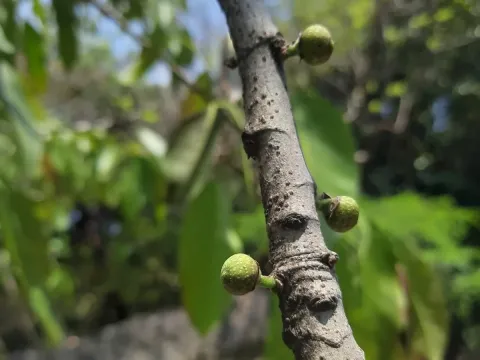
Ficus superba
Ficus superba
Ficus superba, belonging to the Moraceae family, is a notable tropical tree species often found in Asian forests. This plant is recognized for its impressive size and, in many cases, its hemiepiphytic growth habit, where it begins life on another tree before forming its own root system.
What the section contains
Ficus superba
The native distribution of Ficus superba covers a range from Japan and China to Southeast Asia. It thrives in humid tropical and subtropical environments, flourishing in areas that provide consistent rainfall and stable, warm temperatures throughout the year.
Cultivation requirements involve well-draining, nutrient-rich soils that support deep root growth without allowing for prolonged waterlogging. Providing an appropriate light environment is essential for the tree's canopy development and overall health.
Agrotechnical management focuses on space management and site selection, as the root system is expansive and can influence surrounding infrastructure. Ensuring adequate soil fertility through organic amendments can help maintain vigorous growth in young specimens.
The species serves various purposes, primarily in urban greening and environmental restoration projects. Its dense canopy provides significant shade and contributes to habitat creation, making it a valuable asset in tropical landscape architecture.
The health of Ficus superba is frequently challenged by common pests such as scale insects, mealybugs, and spider mites. Proactive scouting and the use of integrated pest management strategies are vital for maintaining the aesthetic and structural integrity of the trees.
Pathogenic threats include leaf spot and root rot, which are often triggered by improper irrigation cycles or poorly ventilated growing conditions. Proper maintenance practices, such as clearing debris and ensuring good airflow, are the primary defenses against these infections.