
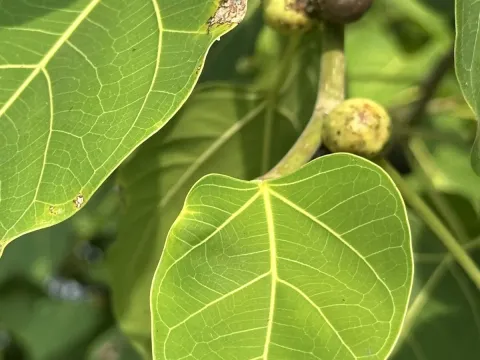
Ficus rumphii
Ficus rumphii
Ficus rumphii, commonly known as Rumph's fig, is a prominent member of the Moraceae family. Native to South and Southeast Asia, this species is highly valued for its robust growth habit and its ability to thrive in diverse ecological conditions ranging from tropical forests to rocky outcrops.
What the section contains
Ficus rumphii
The botanical structure of Ficus rumphii features a distinctive, partially deciduous crown and smooth, greyish bark. It often begins as an epiphyte, utilizing a host tree, before developing a massive root system that eventually supports its independent growth as a standalone tree.
For optimal development, this species requires a tropical climate with high humidity levels and consistent temperatures. It thrives in full sun to partial shade, showing high tolerance to varying light intensities, which makes it an adaptable species for diverse horticultural applications.
The ideal soil substrate for this crop should be well-draining, rich in organic matter, and maintain a slightly acidic to neutral pH level. Proper irrigation management is critical, as the roots require sufficient moisture but are highly susceptible to rot in waterlogged conditions.
Horticulturally, Ficus rumphii is extensively used for landscape beautification in tropical regions. Its ability to withstand environmental stress makes it a preferred choice for urban planting projects, as well as for container gardening in controlled environments or botanical conservatories.
The primary pests affecting Ficus rumphii include scale insects and spider mites, which can cause significant damage to the leaf tissue during dry spells. Regular inspection and the application of horticultural oils or soaps are recommended to control these populations.
Pathogenic threats, particularly fungal infections like root rot, are typically triggered by poor drainage or over-irrigation. Maintaining a well-aerated growth medium and implementing strict sanitation practices are the best defenses against these detrimental horticultural threats.