
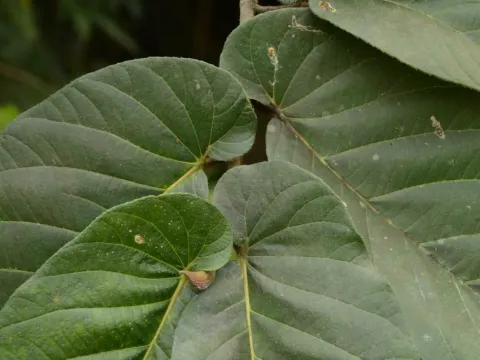
Ficus cunia
Ficus cunia
Ficus cunia is a versatile evergreen tree belonging to the Moraceae family. Native to the Himalayan region and parts of Southeast Asia, it thrives in tropical and subtropical climates, particularly in riverine valleys and moist forest edges where humidity remains high throughout the year.
What the section contains
Ficus cunia
The plant requires deep, well-draining, and fertile soil to reach its full potential. While it is adaptable to various soil types, it performs best in loamy substrates that hold sufficient moisture without becoming waterlogged, as stagnant water can lead to root rot.
Botanically, it is recognized for its unique cauliflory, where its figs emerge directly from the trunk and woody branches rather than from the branch tips. This structural characteristic requires careful planning in planting to ensure the trunk remains accessible for harvest.
Ficus cunia thrives in environments with partial shade, though it can tolerate full sun provided that soil moisture is consistently managed. It is sensitive to prolonged cold spells, making it unsuitable for regions prone to deep, hard freezes.
Regular irrigation is essential during dry seasons to maintain the health of the tree. The tree serves as an excellent candidate for reforestation and agroforestry projects due to its fast growth rate and ability to stabilize soil in sloped or riverside areas.
The primary agricultural utility of Ficus cunia lies in its edible figs, which are a vital nutritional resource for local populations. The fruits are typically consumed fresh or processed, providing a good source of dietary fiber and essential minerals.
Beyond human consumption, the tree is highly valued as a high-quality fodder crop. In many rural districts, the leaves and young shoots are harvested to supplement the diets of goats, cattle, and buffalo, especially during periods when grass is scarce.
The wood of Ficus cunia is utilized in rural construction and for making various household implements. Its bark is also known to produce fibers used for cordage, showcasing the plant's multifaceted economic value to sustainable farming communities.
Productivity is largely determined by tree age and canopy management. When pruned correctly, Ficus cunia can increase its fruit-bearing surface on the main stem, thereby maximizing the total output per hectare in managed orchards.
Integrating Ficus cunia into existing agricultural systems offers economic security. By acting as both a food source and a reliable fodder provider, it helps reduce the risk of crop failure while providing consistent yields throughout the productive season.
Ficus cunia is susceptible to common tropical pests, including aphids and mealybugs, which tend to congregate on the undersides of leaves and on developing fruit clusters, potentially causing stunted growth and fruit drop.
Fungal diseases, such as leaf spot and anthracnose, are significant concerns during the monsoon or humid seasons. Good air circulation through regular thinning of the canopy is the most effective cultural practice to mitigate these risks.
Spider mites are a persistent threat in warmer, drier microclimates. These pests can rapidly colonize the leaves, leading to chlorosis and early defoliation if left unchecked, which can significantly reduce the tree's overall vigor.
Soil-borne pathogens can become an issue if fertilizers are applied incorrectly or if drainage systems fail. Maintaining a balanced soil nutrient profile is crucial for ensuring the tree maintains a natural resistance to environmental stress.
Integrated pest management, combining physical barriers, biological controls, and sustainable horticultural practices, is recommended. Avoiding heavy chemical pesticides helps preserve the beneficial insects that contribute to the natural ecosystem of the grove.
Harvesting the fruits of Ficus cunia is a labor-intensive process due to the cauliflorous nature of the tree. Each cluster must be inspected and hand-picked to prevent damage to the delicate skin of the fruit and the tree's trunk.
Timing the harvest is critical, as the fruit matures over an extended period. Farmers must perform frequent inspections to ensure that fruit is gathered at the stage of peak ripeness for either immediate consumption or local sale.
Due to the short shelf life of the harvested figs, they should be processed or marketed as soon as possible after picking. Proper ventilation during transit is necessary to prevent spoilage and fermentation caused by the high sugar content.
For fodder purposes, harvesting involves the systematic pruning of branches. This dual-purpose strategy allows farmers to collect green biomass while simultaneously encouraging the growth of new, vigorous fruiting wood for the following season.
The harvest cycle is highly dependent on local weather patterns and tree maturity. Successful cultivation requires a deep understanding of these rhythms to optimize the use of seasonal labor and maximize the overall yield efficiency of the plantation.