
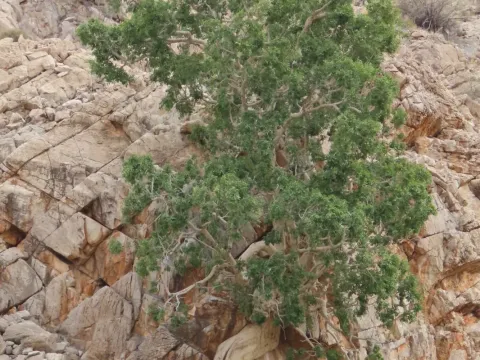
Ficus cordata
Ficus cordata
Ficus cordata, commonly known as the heart-leaved fig, is a robust plant belonging to the Moraceae family. It is native to the rocky landscapes of Southern Africa, where it has evolved to thrive in nutrient-poor soils and rugged, exposed environments.
What the section contains
Ficus cordata
Botanically, this species is noted for its distinctive cordate (heart-shaped) leaves and its ability to act as a lithophyte, often anchoring itself into rocky crevices. Its structure can vary significantly, ranging from a large, sprawling tree to a more compact shrub depending on its local habitat.
In terms of environmental requirements, Ficus cordata demands high light intensity. It is a sun-loving plant that needs full exposure to maintain its vigorous growth rate and prevent etiolation. It is best suited for climates that mirror its native subtropical conditions.
The soil profile for this plant must emphasize drainage above all else. While it is adaptable to various soil types, waterlogged conditions are fatal. Utilizing a mixture of coarse sand, perlite, and organic matter ensures that the roots receive sufficient aeration.
Watering frequency should be moderate, allowing the growing medium to dry out slightly between cycles. During the winter, the plant enters a period of semi-dormancy, requiring significantly less water to maintain its structural integrity and health.
Common pests affecting Ficus cordata include spider mites, which thrive in low-humidity environments. These tiny arachnids feed on plant sap, causing the leaves to develop a mottled appearance and eventually drop if the infestation is not addressed.
Scale insects are another significant concern, appearing as small, brownish bumps along the stems and leaf veins. These pests are notoriously difficult to eradicate and often require persistent application of horticultural oils or systemic pesticides.
Root rot is the most prevalent disease, typically resulting from poor drainage or overwatering. Once the root system begins to decay, the plant loses its ability to uptake water, leading to rapid wilting and the potential for secondary fungal infections.
Fungal leaf spot can occur if there is inadequate airflow around the foliage. This condition is characterized by dark, irregular patches on the leaves and can be mitigated by ensuring proper spacing and avoiding overhead irrigation during cooler hours.
Effective management of these threats involves proactive monitoring, maintaining consistent hygiene within the growing area, and ensuring that the plant is not subjected to extreme environmental stress that weakens its natural defenses.