
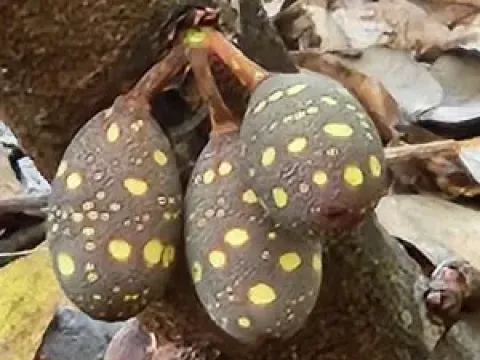
Ficus dicranostyla
Ficus dicranostyla
Propagation of Ficus dicranostyla in the wild is primarily facilitated by seed dispersal, mainly through birds and small mammals that feed on its syconia. In agricultural settings, vegetative propagation via cuttings is preferred to ensure consistency in plant growth and to establish new plantations effectively.
What the section contains
Ficus dicranostyla
Cuttings should be harvested during the early part of the wet season, as this period provides the most favorable conditions for root development. Using hormonal rooting compounds is recommended to improve the success rate, as the stems can be woody and slow to establish on their own.
Seeds require a light, well-draining substrate rich in organic material for optimal germination. Maintaining a steady temperature between 25 and 28 degrees Celsius, along with consistent moisture levels, is critical for successful emergence during the initial stages of development.
Young seedlings should be transplanted into larger containers once they develop several true leaves, ensuring that the root system is not disturbed. Adequate spacing between young plants is necessary to prevent overcrowding, which can lead to competition for light and nutrients.
Once established, the young trees require regular watering during their first two years of growth. This early care stage is crucial for building a strong root structure, which will later allow the tree to withstand the natural climate fluctuations characteristic of its native environment.
Ficus dicranostyla belongs to the Moraceae family and is native to the tropical regions of Africa. It is well-adapted to savanna environments, displaying a remarkable ability to thrive in climates with distinct wet and dry seasons, making it a robust choice for certain tropical agroforestry systems.
The tree requires full sun exposure to maintain its vigorous growth and dense canopy structure. While it can tolerate partial shade in its juvenile stage, mature specimens generally need significant solar energy to sustain their metabolic processes and eventual fruit production.
Soil requirements for this species include good drainage and a medium level of fertility. Although it can grow in various soil types, loamy and sandy soils provide the best conditions for deep root penetration, which is vital for the tree's overall stability and long-term health.
Optimal growth occurs in temperatures ranging from 20 to 35 degrees Celsius. The tree's adaptation to savanna conditions allows it to endure prolonged periods of heat, provided the soil moisture is sufficient to support its transpiration needs throughout the day.
Proper site selection is essential, as the species can reach considerable dimensions over time. Wind resistance is a notable trait, allowing it to serve as a biological barrier in agricultural landscapes while contributing to the local biodiversity of the area.
The yield of Ficus dicranostyla consists of syconia, which are of high ecological importance. In local agricultural contexts, these fruits serve as a supplemental food source and are highly valued for their nutritional content during lean seasons, supporting both wildlife and local communities.
Fruit production generally begins several years after planting, with yields increasing steadily as the tree reaches maturity. The frequency of harvests is often linked to seasonal rainfall patterns, which trigger flowering and subsequent fruit set in the tree canopy.
In addition to its fruits, the tree provides leaves that are occasionally utilized as fodder for livestock. This dual-use capability makes it a versatile species in agroforestry, where sustainable management of all plant parts is prioritized to maximize the value of the land.
Routine pruning is recommended to maintain the tree's health and enhance fruit yields. By removing dead or diseased wood, the plant can direct more energy toward the development of healthy fruiting branches, ultimately leading to more consistent harvest outcomes year after year.
Post-harvest management involves careful collection of the fruits to avoid damaging the tree's bark or branches. Using appropriate tools for gathering ensures that the tree remains productive for many years, as repeated physical damage can invite pests and infections into the wood.
Fungal diseases are a primary threat to Ficus dicranostyla, particularly in humid or overcrowded conditions. Leaf spot diseases are common, appearing as discolored lesions on the foliage, which can impair photosynthesis and lead to significant defoliation if left unmanaged.
Pests such as aphids, scale insects, and spider mites often infest the tender parts of the tree, such as new shoots and leaves. These insects feed on plant sap, causing stunted growth and providing entry points for secondary infections or viral agents transmitted during feeding.
Management of these threats involves cultural practices such as ensuring adequate airflow between trees and maintaining proper sanitation by removing fallen leaves and debris. These simple steps often reduce the incidence of disease and pest outbreaks in a plantation setting.
Root rot, often caused by waterlogging, is a critical issue for this species. If the soil does not drain correctly, the roots become susceptible to pathogens, which can rapidly kill even healthy, mature trees, making drainage assessment a top priority before planting.
When chemical interventions are necessary, they should be applied with precision to minimize the impact on local pollinators and beneficial insects. Integrated pest management, which combines monitoring with biological controls, is the preferred approach for sustaining the long-term health of the crop.