
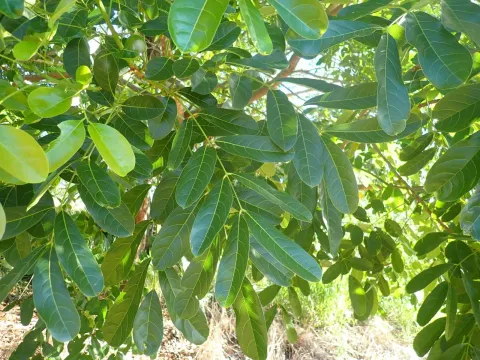
Khaya
Khaya
Khaya is a genus of trees in the Meliaceae family, widely recognized as African mahogany. Native to tropical regions of Africa and Madagascar, these trees are highly valued in forestry for their dense, durable, and aesthetically pleasing timber.
What the section contains


Khaya
These trees thrive in tropical climates with significant annual rainfall and consistent temperatures. They are not frost-tolerant and require high humidity levels to support optimal physiological processes throughout the growing season.
Soil requirements for Khaya are stringent; they demand deep, fertile, and well-drained soils. Loamy soils or deep sandy clays are ideal, provided they allow for deep root penetration without the risk of waterlogging, which the species poorly tolerates.
Regarding light, Khaya is a heliophytic plant that requires full sunlight for robust growth. Shade management is critical only during the seedling stage, after which the trees need an open canopy to develop straight, high-quality timber trunks.
Proper silvicultural practices involve careful thinning schedules to ensure that each tree has sufficient space and access to nutrients. This management strategy maximizes growth rates and ensures the production of clear, high-value heartwood.
The primary biotic challenge in Khaya cultivation is the mahogany shoot borer, Hypsipyla robusta. This insect larvae tunnels into the terminal shoot, causing stunted growth and branching, which severely depreciates the timber value.
Integrated pest management (IPM) is the gold standard for controlling shoot borers. This involves a combination of pheromone trapping, biological controls, and careful selection of planting sites to reduce the pest's life cycle influence.
Fungal pathogens often manifest as leaf spots or stem cankers, particularly in dense, poorly ventilated stands. Maintenance of optimal plant spacing and canopy management helps prevent these outbreaks by lowering humidity levels around the foliage.
To further protect the crop, foresters often engage in intercropping. Growing Khaya alongside other tree species or in agroforestry systems creates a complex environment that discourages specialized pests from locating their host plants.
Continuous monitoring of the forest health is mandatory. Early detection of symptoms allows for targeted interventions, such as the removal of infected branches or the application of localized treatments, preventing larger economic losses.