
Langsat
Lansium
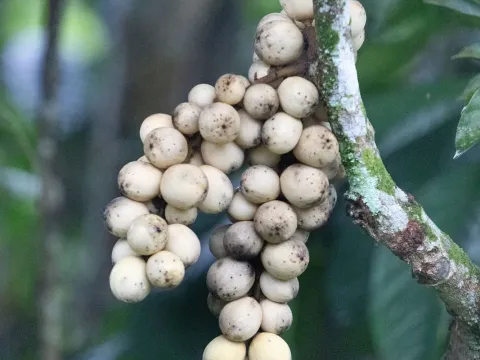
Langsat (Lansium domesticum) is a prominent tropical fruit tree belonging to the Meliaceae family. Native to Southeast Asia, it is recognized for its thick, leathery leaves and its habit of producing fruit directly on the main trunk and primary branches.
What the section contains

Langsat
The tree thrives in humid tropical environments, requiring annual rainfall that is well-distributed. It prefers temperatures between 22°C and 32°C and requires high atmospheric humidity to maintain healthy vegetative growth.
Soil requirements for Langsat include well-draining, deep, and fertile soils rich in organic matter. Sandy loams or alluvial soils are preferred, as they provide the necessary aeration for root development while retaining sufficient moisture.
Light management is crucial; while mature trees can tolerate more sun, young saplings need shade to prevent leaf scorch and to simulate the natural forest canopy under which the species evolved.
Proper agronomic care involves balanced fertilization, focusing on nitrogen during the juvenile stage and phosphorus and potassium during the pre-flowering and fruit-setting phases to ensure high yields.
Langsat productivity is highly dependent on the tree's health and age. Seedlings typically take 10–15 years to bear fruit, whereas grafted trees can produce a harvest within 5–7 years after planting.
The fruit grows in clusters of 10 to 20 berries. A mature, healthy tree can produce upwards of 50 to 100 kilograms of fruit per season, depending on the specific cultivar and environmental conditions.
Flowering usually occurs twice a year, triggered by dry spells followed by rain. This cyclical pattern requires precise water management to ensure that flowers successfully set into fruit clusters.
Commercial value is derived from the translucent, juicy segments of the fruit, which have a delicate sweet-and-sour flavor profile. It is a staple fruit in local markets across the Malay Archipelago.
Yield stability can be improved by planting multiple cultivars in the same orchard to enhance cross-pollination, which often results in larger and more uniform fruit sizes.
Major pests affecting Langsat orchards include mealybugs, scale insects, and aphids, which often cluster on young shoots, leading to stunted growth and the spread of sooty mold.
Fungal diseases, specifically anthracnose (Colletotrichum gloeosporioides), are the primary threat, causing fruit rot and spotting. Frequent monitoring and application of copper-based fungicides are standard in commercial management.
Root rot, often caused by waterlogging or pathogens like Phytophthora, is a silent killer of Langsat trees. Ensuring excellent drainage is the most effective preventative measure against this threat.
Integrated Pest Management (IPM) practices are recommended, combining physical removal of infected parts with the introduction of beneficial predator insects to keep pest populations below the economic injury level.
Maintaining orchard hygiene, such as removing fallen leaves and decaying fruit, is essential to reduce the inoculum load of common pathogens within the cultivation area.
Harvesting Langsat is a labor-intensive process that must be performed by hand. The clusters are carefully cut from the trunk using shears to ensure the tree bark is not damaged during the process.
Determining the correct harvest time is based on skin color and fruit firmness. The skin typically turns a pale yellow or light cream color when the fruit reaches its peak sweetness and acidity balance.
Post-harvest shelf life is relatively short due to the thin, delicate pericarp of the fruit. To extend its quality, fruits are often kept in ventilated containers and kept away from direct heat sources.
Handling must be minimal to prevent bruising. Even minor damage to the skin can cause the fruit to ferment or rot within 48 hours, making careful sorting immediately after harvest vital.
Market preparation involves removing twigs and damaged berries from the clusters to create a high-quality product that meets the standards of both domestic and export retailers.