
African mahogany
Khaya senegalensis (Desr.) A. Juss.
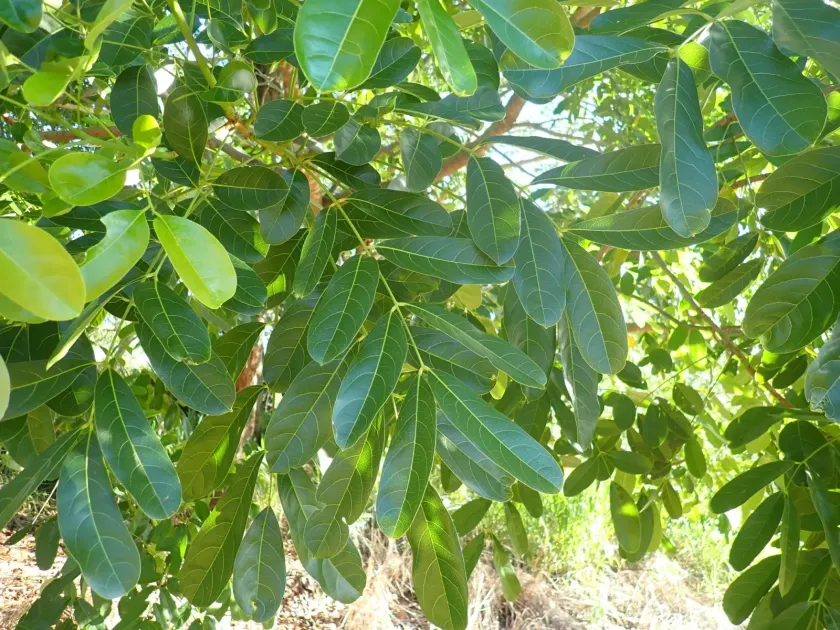
Description
Sowing dates
Propagation of Khaya senegalensis in nurseries is primarily carried out via seeds. Sowing should be performed immediately after seed collection, as they have a short shelf life and lose viability rapidly if not planted within a few weeks.
The optimal time for sowing is the beginning of the rainy season, which provides the necessary moisture for the young root system to establish itself. Seedlings typically emerge within 2–3 weeks under consistent temperature conditions.
In industrial forest plantations, pre-germination in shaded nursery beds is common practice. Seedlings are transplanted to their permanent site once they reach a height of 30–50 centimeters.
Proper sowing depth is critical, usually ranging between 1 and 2 centimeters. Shallow sowing leads to desiccation, while excessive depth can result in seed rot due to a lack of oxygen in the soil profile.
Planting density in forest plantations varies based on objectives: for high-quality timber production, trees are spaced 3–5 meters apart to encourage straight vertical growth and limit side branching.
Growing requirements
African mahogany belongs to the Meliaceae family and is a tropical tree species requiring specific conditions for optimal growth. It is native to regions with distinct wet and dry seasons, typical of the African savanna belt.
The species is sensitive to soil quality and thrives best in deep, well-drained alluvial or sandy loam soils. It does not tolerate waterlogged areas where stagnant water can quickly lead to lethal root rot.
Climate requirements include high annual temperatures, ideally between 20°C and 30°C. While the plant shows moderate drought tolerance once established, it requires an annual rainfall between 700 and 1200 millimeters for healthy timber formation.
The tree requires full sun exposure, especially in the early stages of development. While mature trees can tolerate slight side shading in dense forest stands, shading during the juvenile phase significantly hampers vertical growth.
To optimize industrial growth rates, regular weeding of the area around the base of the trunk is recommended. The application of complex mineral fertilizers during the early vegetative stages has shown positive results in boosting tree vigor.
Yield
The primary economic value of Khaya senegalensis lies in its high-quality timber, commonly known as African mahogany. This wood is prized for its high density, durability, and natural resistance to termites and fungal decay.
The timber is widely sought after for high-end furniture manufacturing, luxury boat building, musical instrument construction, and fine carpentry. Its wood features a beautiful reddish hue and is excellent for polishing and finishing.
Beyond timber, the plant is utilized in traditional medicine. The bark contains bitter compounds that have been historically used to treat fevers, coughs, and gastrointestinal issues in local communities.
The foliage of the tree serves as an important fodder source for livestock during dry seasons. Its protein-rich leaves provide vital nutritional support for goats and sheep in tropical regions where grazing resources are otherwise limited.
The species is also highly valued for urban landscaping. Thanks to its wide, shady crown and evergreen habit, it is a preferred choice for creating shaded avenues and park landscapes in tropical climates.
Main diseases and pests
The main biological threat to this crop is the shoot borer Hypsipyla robusta. The larvae of this moth bore into the terminal shoots, which causes the tree to fork or twist, drastically reducing the value of the timber for commercial use.
Fungal diseases, including leaf spot and root rot, are common when agricultural practices are neglected. Excessive soil moisture and poor drainage are the primary drivers of these pathogenic outbreaks.
In arid regions, young trees are susceptible to bark beetles, especially when the plants are stressed due to drought. Effective prevention involves maintaining optimal planting density and avoiding mechanical damage to the bark during maintenance.
Defoliating pests, such as certain species of Lepidoptera, can cause significant damage to young plantations by reducing the photosynthetic capacity of the plants. Controlling these pests often requires the use of systemic insecticides in nursery settings.
- Regular monitoring of crowns for signs of borer infestation.
- Sanitary pruning of affected branches to prevent further spread.
- Selection of pest-resistant genetic clones for reforestation projects.