
Khaya anthotheca
Khaya anthotheca (Welw.) C. DC.
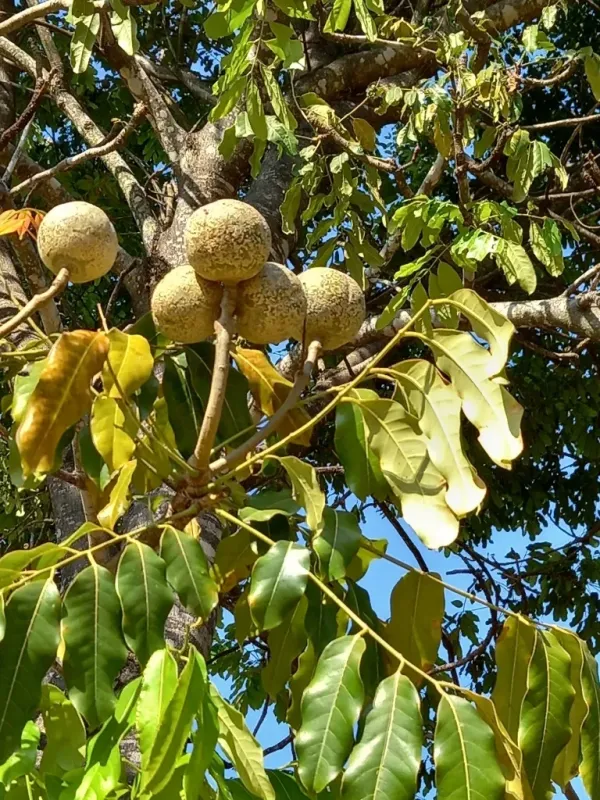
Description
Sowing dates
Sowing Khaya anthotheca seeds should be performed immediately after harvest, as the seeds lose their viability rapidly. In tropical nursery settings, seeds are sown in trays with a light, sandy substrate while maintaining constant moisture levels.
For successful germination, the seeds require a temperature range between 25 and 30 degrees Celsius. The ideal time for planting seedlings is the onset of the rainy season, allowing the young plants to establish themselves before the dry period begins.
Seedlings typically emerge within 2 to 4 weeks after sowing. Once the seedlings reach a height of 20 to 30 centimeters, they are ready to be transplanted into individual containers or prepared for field planting in forest plantations.
In large-scale forestry, maintaining proper planting density is crucial to encourage straight vertical stem growth. A recommended spacing is 3 by 3 meters, which provides sufficient space for each tree to grow without intense competition for light.
Regular weeding around young trees during the first three years of growth is essential. Excessive competition from weeds during this critical development stage significantly slows growth rates and can lead to high mortality among young plantations.
Growing requirements
Khaya anthotheca is a member of the Meliaceae family that naturally thrives in humid tropical rainforests. The species is highly demanding in terms of soil fertility and requires a deep layer of humus for optimal growth.
The tree requires significant annual rainfall, ideally exceeding 1200 millimeters, to reach its full potential. The species does not tolerate prolonged droughts well, especially in its juvenile phase, making site selection crucial to avoid waterlogged or overly arid ground.
The soil must have excellent drainage and a neutral to slightly acidic pH. Khaya anthotheca is sensitive to soil compaction, which is often a limiting factor when establishing timber plantations on formerly used agricultural land.
Climatic conditions must strictly adhere to the tropical belt with minimal seasonal temperature variation. Frost is lethal to this species, meaning it cannot be cultivated in temperate regions, even under greenhouse conditions, due to its size.
Light availability plays a critical role in its development. While young trees can tolerate partial shade, they require full overhead sunlight as they mature to build biomass and produce high-quality, dense timber.
Yield
The yield of Khaya anthotheca timber depends heavily on the intensity of forest management and soil quality. With proper silviculture, the tree can reach heights of 30 to 40 meters, providing a substantial stem diameter suitable for industrial sawmilling.
The waiting period for harvesting commercial timber ranges from 40 to 60 years. This makes the crop a long-term investment for forestry operations focused on producing premium wood for the furniture and interior design industries.
The wood is prized for its density and resistance to warping, which commands high market prices. The yield of high-quality lumber per hectare varies based on thinning techniques and the overall health of the plantation.
Beyond its timber value, the species serves an important role in agroforestry by improving soil health. Its leaf litter enriches the soil with organic matter, which can benefit the yield of neighboring crops in integrated farming systems.
The volume of merchantable timber also depends on the absence of trunk defects, achieved through regular pruning of lateral branches. Without managing the crown shape, the tree produces excessive knots, which drastically lowers the timber's grade.
Main diseases and pests
The primary threat to Khaya anthotheca is the mahogany shoot borer, Hypsipyla species. These insects attack the terminal bud, causing the stem to deform and branch out, which leads to a significant loss in commercial timber value.
Fungal infections, such as root rot, can develop if the water table is too high or if trees are planted in poorly drained areas. Symptoms include premature leaf yellowing and the death of individual branches across the crown.
In nursery environments, spider mites and aphids are common pests that feed on young foliage, weakening the tree's immune system. Preventive insecticidal treatment is necessary during the early stages to avoid widespread infestation.
Rodents are another typical threat, as they strip the bark of young trees during the dry season. These wounds create entry points for secondary pathogens and fungi, leading to stem decay and potential tree death.
Natural competition from vines and lianas negatively impacts growth if left unmanaged. Lianas wrap around the trunks of young trees, blocking sunlight and deforming the developing wood, necessitating routine plantation monitoring.
Harvesting
Harvesting is performed once the trees reach the target stem diameter. This typically occurs after 50 years of growth, when the tree has developed the characteristic, high-quality textured wood desired by fine furniture makers.
Felling operations require specialized equipment to minimize damage to neighboring trees and preserve the integrity of the felled stem. Harvesting is preferably done during the dry season to facilitate easier extraction from the forest floor.
After felling, the timber undergoes primary processing: limbing, cross-cutting into logs of specified sizes, and grading. This ensures the rational utilization of the entire volume of wood harvested from the plantation.
Drying is a critical post-harvest step. Khaya anthotheca is prone to moisture changes, so initial air-drying in stacked piles under cover must be slow and controlled to prevent the development of internal cracks and surface deformation.
Final sorting of materials occurs at sawmill facilities. Production waste, such as sawdust and bark, is frequently repurposed as biomass fuel or utilized by local agricultural operations for mulch or compost production.