
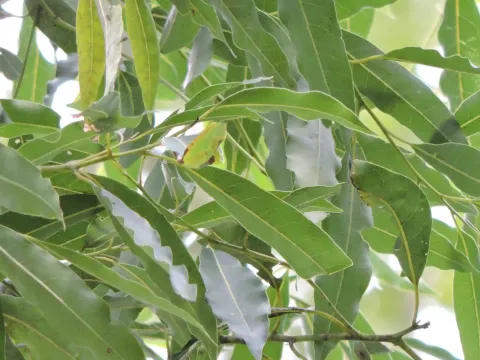
Ocotea puberula
Ocotea puberula
Ocotea puberula is a prominent species within the Lauraceae family, native to the tropical and subtropical regions of South America. It is widely recognized in countries like Brazil and Argentina for its significant ecological and economic importance.
What the section contains
Ocotea puberula
This species thrives in deep, fertile soils with excellent drainage capabilities. It is highly adapted to tropical climates with high annual rainfall and consistent temperature ranges, making it an essential component of native forests.
The tree exhibits moderate shade tolerance during its juvenile stage, allowing it to regenerate effectively under the forest canopy. As it matures, it moves toward the canopy layer to maximize photosynthesis under full sunlight.
From a forestry perspective, Ocotea puberula is valued for its dense, high-quality timber. It is extensively used in carpentry, fine woodwork, and structural construction due to its resistance and aesthetic properties.
Botanically, the tree is characterized by its evergreen leaves featuring fine pubescence, which serves as a protective mechanism. It produces small, fragrant flowers that are vital for sustaining local pollinator biodiversity.
The primary threats to Ocotea puberula include root rot pathogens that proliferate in waterlogged soil conditions. Proper soil management and drainage are essential to mitigate the risk of fungal infections.
Insect pests, particularly borers that target the stem and branches, pose a risk to the structural integrity of the wood. Integrated pest management strategies are crucial for maintaining healthy plantation stocks.
In nursery environments, seedlings are susceptible to damping-off diseases caused by various soil-borne fungi. Sterile substrate and regulated humidity are standard practices to ensure high survival rates among young plants.
Competition from aggressive invasive weeds can significantly stunt the growth of young trees in reforestation projects. Mechanical weeding or the application of organic mulch around the base is recommended for the first few years.
Environmental stressors such as extreme droughts or uncharacteristic frost can weaken the tree's natural defense systems. Maintaining optimal site selection and tree density is the most effective way to prevent widespread health issues.