
Heartnut
Juglans ailanthifolia
Description
Sowing dates
Planting heartnut saplings is best performed in early spring once the ground has thawed, or in late autumn before the first hard frost. It is recommended to source grafted trees from reputable nurseries to ensure genetic purity and faster fruiting.
When propagating from seeds, nuts should be planted in the fall at a depth of 8–10 centimeters. If spring planting is preferred, seeds must undergo cold stratification in moist sand for several weeks to break dormancy and ensure high germination rates.
Spacing is a crucial factor, as heartnut trees develop broad, spreading crowns that can span up to 12 meters. A distance of at least 8–10 meters between trees is necessary to provide adequate sunlight and airflow for every individual specimen.
Select a planting site that is well-drained and sheltered from heavy winds. Heartnut trees are sensitive to late spring frosts, so avoiding low-lying areas where cold air settles is essential to protect young flower buds and tender foliage.
The planting pit should be approximately 80x80x80 centimeters, enriched with organic compost to provide the young tree with a strong nutrient base. Proper soil preparation during planting significantly reduces the time required for the tree to become established.
Growing requirements
The heartnut tree (Juglans ailanthifolia) belongs to the walnut family and is renowned for its excellent cold hardiness, capable of surviving temperatures as low as -30°C. Originating from Japan, it is well-suited for temperate climatic regions.
This species thrives in deep, fertile, and well-drained loamy soils. It is intolerant of waterlogged areas or heavy clay soils that hold excess moisture, which can lead to root rot and other physiological stressors for the tree.
Heartnuts are heliophilic, meaning they require full sun exposure to reach maximum growth potential and yield quality. In shaded environments, the tree may grow tall and sparse, resulting in significantly lower fruit production.
Maintaining proper soil moisture is essential during the first few years of growth, especially during dry summer spells. Mulching the root zone helps conserve moisture, regulate soil temperature, and suppress competitive weed growth around the tree base.
Regular fertilization with balanced NPK formulas is beneficial for young trees to promote branch development. As the tree matures, focusing on potassium and phosphorus applications will assist in better fruit formation and overall tree health.
Yield
Heartnut trees are known for their early bearing, often producing their first clusters of nuts within 5–7 years of planting. Yield increases steadily as the tree matures, with peak productivity occurring between 15 and 20 years of age.
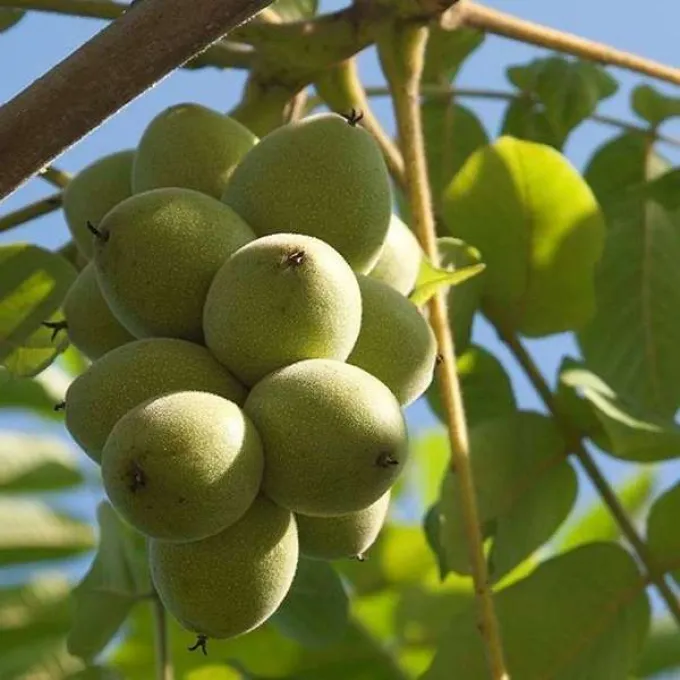
The fruit is uniquely displayed in long, pendulous clusters, often containing multiple nuts that resemble grapes. This distinct characteristic makes the tree an attractive ornamental as well as a productive agricultural crop.
The kernels possess a rich, buttery flavor and are highly prized by the confectionery industry. Furthermore, the nuts are easy to crack, often releasing the kernel in one or two clean pieces, which adds significant market value.
An established, healthy heartnut tree can yield between 20 to 40 kilograms of nuts annually under optimal conditions. Yields may fluctuate depending on the pollination success and climatic stability during the flowering period.
Cross-pollination is highly recommended to enhance fruit set, so planting multiple cultivars in the same vicinity is a standard practice for commercial growers to ensure consistent and high-quality annual harvests.
Main diseases and pests
Heartnut trees are relatively resistant to many diseases, though they may occasionally suffer from walnut blight or leaf spot in overly humid climates. Preventive pruning to improve canopy aeration is the most effective cultural control method.
The codling moth is the most significant insect pest, capable of damaging the developing kernels. Integrated Pest Management (IPM) strategies, including pheromone traps and biological controls, are recommended for maintaining a healthy orchard.
Bacterial canker can affect young stems if the bark is damaged or if the tree is under high environmental stress. Maintaining overall tree vigor through proper fertilization and avoiding mechanical damage to the trunk is crucial for prevention.
Root health is vital, and protection against small rodents that may gnaw on the bark of young trees is essential during the winter months. Using tree guards or maintaining a clear area around the base helps mitigate these risks.
- Prune away diseased or dead wood.
- Disinfect pruning tools between trees.
- Clean up fallen debris to reduce disease cycles.
Harvesting
Harvesting usually takes place in September or October when the outer husks begin to crack open and the nuts fall naturally from the tree. Prompt collection is necessary to keep the kernels clean and dry.
The green husk must be removed shortly after harvest. While it typically separates easily once ripe, protective gloves should be worn as the husk contains tannins that can stain the skin and clothing dark brown.
Curing is a critical step; the nuts must be spread in a single layer in a shaded, well-ventilated location for at least one to two weeks. Proper drying prevents the development of mold and preserves the oil content of the kernels.
Store cured heartnuts in mesh bags or well-ventilated containers in a cool, dry place. This method ensures that the nuts remain stable for 12 to 24 months without degrading in taste or quality.
For long-term storage, keeping the nuts in their shells at slightly cooler temperatures helps maintain the integrity of the heartnut flavor, making them a premium product for both local markets and home use.