
Tetraclinis
Tetraclinis Mast.
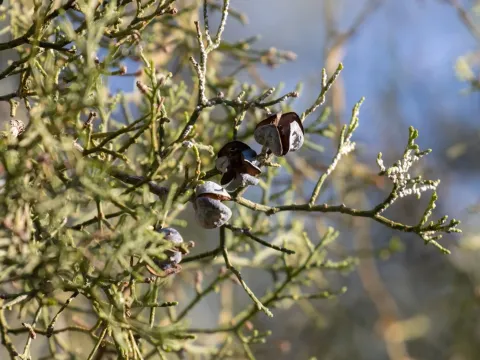
Tetraclinis (scientific name: Tetraclinis articulata) is a unique evergreen conifer belonging to the Cupressaceae family. It is a monotypic genus, standing out for its distinctive scaly foliage and robust, drought-tolerant nature.
What the section contains


Tetraclinis
This tree is native to the western Mediterranean region, specifically found in Morocco, Algeria, Tunisia, Malta, and parts of Spain. It thrives in arid and semi-arid environments, demonstrating remarkable resilience to harsh sunlight and heat.
For successful cultivation, Tetraclinis requires well-drained, limestone-rich soils. It is particularly well-adapted to rocky, calcified slopes where moisture retention is minimal and soil nutrition is relatively low.
Regarding climate, the plant is thermophilic. It demands full sun exposure to maintain its healthy growth rate. While it can withstand occasional dips in temperature, it is not frost-tolerant and requires protection in cold climates.
A key biological feature of Tetraclinis is its ability to resprout from lignotubers. This evolutionary trait allows the tree to recover swiftly after fire damage or heavy pruning, making it exceptionally persistent in its natural habitat.
The primary economic output from Tetraclinis is the production of sandarac resin. This high-quality resin is harvested from the bark and is widely used in varnishes, high-end furniture finishes, and pharmaceutical applications.
The timber of Tetraclinis, often referred to as "thuja wood" or "berber tree," is highly prized in carpentry. It is particularly famous for its intricate grain patterns, often derived from burls or roots, used for luxury objects.
Since the species grows slowly, plantations are designed for long-term sustainability rather than short-term turnover. The harvesting process for both wood and resin must be carefully managed to ensure the longevity of individual trees.
Sustainable resin tapping is a traditional industry in North Africa. When performed correctly, it does not impede the tree's health, allowing for repeated harvests over several decades.
The commercial value is heavily focused on the aesthetics of the timber. Craftsmen prioritize the dense, aromatic wood for fine woodworking, instrument making, and complex decorative veneers.
Forest fires pose the most significant threat to wild populations of Tetraclinis. While the tree has evolved mechanisms to recover, frequent or high-intensity fire events can lead to long-term population decline.
Pests such as bark beetles can infest trees that have been weakened by prolonged drought or improper maintenance. Such infestations can cause significant damage to the xylem and phloem, reducing timber quality.
Root rot pathogens are a primary concern in nurseries or areas with poor soil drainage. Excessive moisture accumulation in the root zone is lethal to this species, which is accustomed to dry conditions.
Habitat loss due to urbanization and over-harvesting remains a challenge. Modern agronomic practices focus on reforestation and controlled exploitation to balance industrial needs with environmental preservation.
In nursery environments, young seedlings are susceptible to damping-off fungi if humidity is not properly regulated. Good air circulation and sterilized potting substrates are essential for a successful start.