
Tetraclinis articulata
Tetraclinis articulata (Vahl) Mast.
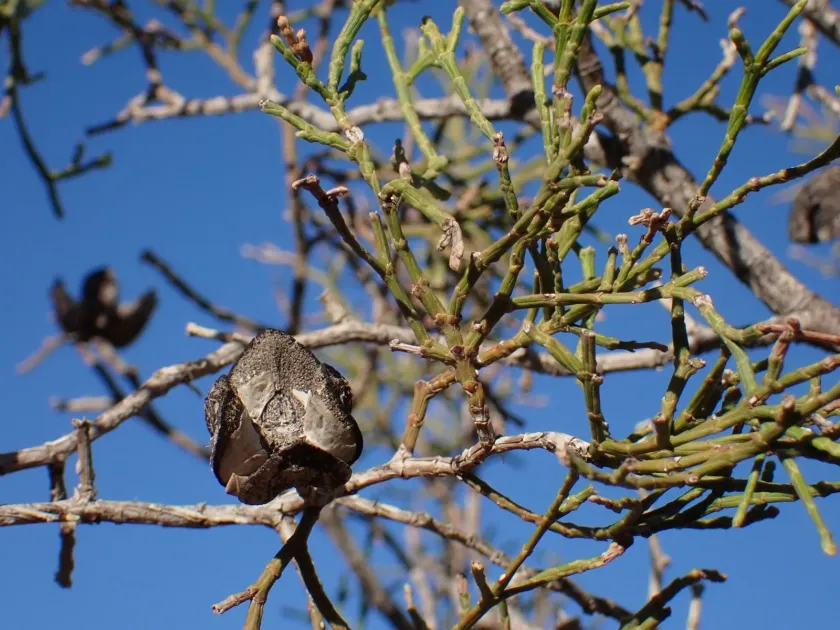
Description
Sowing dates
The propagation of Tetraclinis articulata is primarily achieved through seeds. Seeds should be collected from mature cones and require stratification to ensure uniform germination rates.
Sowing typically takes place in early spring within controlled nursery environments. Seeds are sown into a well-draining sandy loam substrate at a depth of approximately 1-2 centimeters.
Maintaining consistent soil moisture is crucial during the early stages of development. However, excessive watering must be avoided to prevent damping-off diseases, which can decimate seedling populations.
Growth during the first two years is significantly slow, requiring patience and meticulous care. Seedlings should be kept in protected conditions until they develop a robust root system capable of handling environmental stress.
Transplanting to the permanent site is recommended only after the seedlings have reached a sufficient size to withstand outdoor conditions, often at the age of two or three years.
Growing requirements
Tetraclinis articulata is a unique conifer belonging to the Cupressaceae family. It is native to the western Mediterranean region, specifically found in the Atlas Mountains of Morocco, Algeria, and parts of Spain.
The species is highly heliophilic, meaning it thrives under full, direct sunlight. It cannot tolerate shaded environments, which can lead to sparse foliage and stunted development.
In terms of soil preference, this tree is highly adaptable, showing success in rocky, calcareous, and nutrient-poor substrates. Its ability to colonize difficult terrains makes it an excellent choice for reforestation.
The tree exhibits remarkable drought resistance. It has evolved specific physiological adaptations, such as the waxy coating on its scale-like leaves, to minimize water loss during intense heatwaves.
While adapted to Mediterranean climates, it is not frost-hardy. In regions with severe winters, it should be treated as a container plant and moved to a greenhouse during freezing temperatures.
Yield
The primary economic value of the species lies in its high-quality, durable timber, often referred to as 'arar' wood. It is highly sought after for fine woodworking, veneers, and decorative furniture due to its beautiful grain.
Another significant product is the Sandarac resin, which is harvested by making incisions in the tree's bark. This resin is a valued ingredient in the production of high-end varnishes used for musical instruments.
Sandarac is prized for its clarity and quick-drying properties. Its use in conservation and restoration work is well-established, making it a specialty product with consistent market demand.
Yields of timber and resin are linked to the tree's age. Due to the slow growth rate of the species, long-term management strategies are necessary to maintain sustainable production levels.
Ecologically, the tree provides vital protection against soil erosion. Its deep, anchoring root system helps maintain the integrity of steep slopes and fragile mountainous ecosystems.
Main diseases and pests
Wildfires represent the single greatest threat to Tetraclinis forests. Due to the resinous content of the tree, it is highly flammable, and fires can result in catastrophic loss of entire groves.
Pathogenic fungi, particularly those causing root rots like Phytophthora, pose a severe risk to young trees in nurseries or plantations where soil drainage is not properly managed.
Various insect pests, such as scale insects, can attack the foliage and stems. While mature trees are generally resilient, heavy infestations can weaken them and predispose the plants to further complications.
Overgrazing by livestock is a major concern in natural habitats. Animals often consume young shoots, preventing the regeneration of the population and leading to the degradation of the forest stand.
Climatic stress resulting from prolonged droughts can affect the plant's natural defenses, making it more susceptible to secondary pests and various environmental pathogens.