
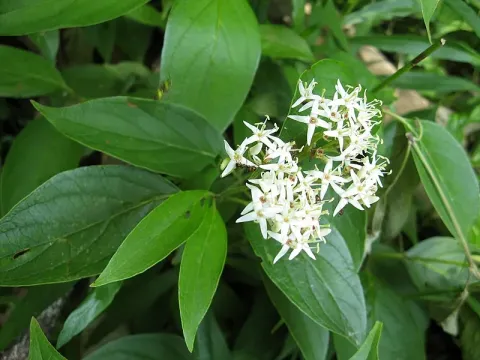
Stiff dogwood
Cornus stricta
Stiff dogwood (Cornus stricta) is a deciduous shrub belonging to the Cornaceae family. Native to the southeastern United States, it is primarily found in swampy habitats, bottomland forests, and along riverbanks, showcasing its tolerance for high moisture levels.
What the section contains
Stiff dogwood
The plant thrives in rich, well-draining yet moist soils. In an agricultural or landscape setting, it is essential to mimic these conditions by ensuring the substrate does not dry out completely, especially during the establishment phase.
While the species is hardy across various temperate zones, it prefers partial shade in areas with intense midday heat. Providing the right microclimate is crucial for ensuring vigorous growth and the characteristic straight, upright habit of the stems.
Economic uses of this crop include soil stabilization projects, where its extensive root system is utilized to prevent erosion. It also serves as a significant biological buffer in riparian zones and supports local wildlife populations.
The morphology of the shrub includes slender branches that grow vertically, giving the plant its common name. The leaves are ovate and paired, creating a dense canopy that is effective for privacy screening or windbreak applications.
Common health issues for Cornus stricta include leaf spot diseases and powdery mildew. These are predominantly triggered by prolonged high humidity levels and insufficient air circulation within the canopy layers.
Insect pests, particularly aphids and scale insects, frequently target new growth. Their feeding activity can weaken the stems and reduce the overall vigor of the plant if left unmanaged.
Agricultural management should prioritize proper spacing during planting to ensure natural airflow. This simple practice significantly reduces the incidence of fungal outbreaks during rainy seasons.
Application of fungicides is recommended only when preventive measures fail, focusing on systemic treatments that are absorbed by the plant to provide long-term protection.
Integrated pest management (IPM) practices, such as encouraging beneficial predatory insects, help to control aphid populations naturally without the extensive use of broad-spectrum chemicals.