
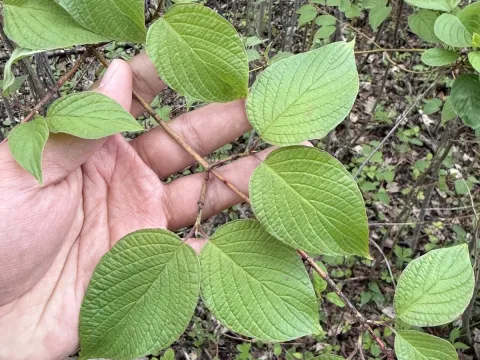
Roundleaf dogwood
Cornus rugosa
Roundleaf dogwood (Cornus rugosa) is a hardy deciduous shrub belonging to the Cornaceae family, native to the northeastern regions of North America. It is widely recognized for its unique foliage and ecological benefits in natural landscaping.
What the section contains
Roundleaf dogwood
This species thrives in well-drained, moderately moist soils and is particularly well-adapted to woodland edges where it can benefit from organic mulch and stable soil temperatures.
The shrub shows a preference for partial shade, although it maintains its structural integrity and health in full sunlight provided the root zone remains consistently cool and moist throughout the summer.
Botanically, it is defined by its wide, ovate leaves that exhibit a distinct wrinkled surface. Its growth habit is typically upright when young, becoming more spreading and rounded as the plant matures in the landscape.
Standard cultivation practices involve routine pruning to manage the shrub's shape and regular irrigation during dry spells to prevent premature leaf drop and ensure healthy fruit production.
The primary biological threats to the roundleaf dogwood include leaf spots and powdery mildew, which can significantly impact the plant's aesthetic value if environmental conditions are suboptimal.
Insect pests, including aphids and specific types of scale insects, may periodically infest the succulent new growth, necessitating vigilant monitoring during the active growing season.
To mitigate disease pressure, it is essential to provide adequate spacing between plants to ensure constant airflow, which helps keep the foliage dry and inhibits the spread of fungal spores.
Sanitation practices, such as the prompt removal and disposal of infected leaf litter and dead branches, play a critical role in managing the overall health of the planting site.
In cases of severe infestation, integrated pest management strategies should be employed, utilizing targeted treatments that minimize harm to beneficial insects while effectively controlling the target species.