
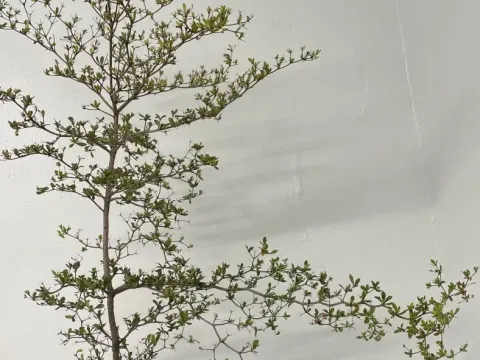
Black olive tree
Bucida buceras
The Black olive tree (Bucida buceras) is a dense, evergreen species belonging to the Combretaceae family, native to the coastal regions of the Caribbean and Central America.
What the section contains
Black olive tree
In terms of climate, this tree thrives in tropical environments and requires full sunlight to maintain its characteristic compact and layered canopy structure.
It is remarkably tolerant of various soil types and exhibits high salt spray resistance, making it an ideal candidate for coastal landscape restoration and urban planting.
Watering requirements should be managed to ensure consistent soil moisture; however, the species is drought-tolerant once it has fully established its deep root system.
The tree is highly valued for its slow growth and non-invasive root system, which allows it to be planted safely near sidewalks, buildings, and residential patios.
The most common pests affecting the Black olive tree include scale insects and mealybugs, which tend to congregate on the undersides of leaves and along stems.
Sooty mold growth is often a secondary problem resulting from the honeydew secreted by sucking insects, requiring both insect control and canopy cleaning.
Root rot is a potential risk in poorly drained soil, which is why proper site preparation and soil aeration are crucial during the initial planting stages.
Occasional leaf drop may occur due to sudden environmental shifts or extreme drought, highlighting the need for stable irrigation practices in ornamental settings.
To maintain a healthy tree, integrated pest management practices should be followed, prioritizing biological control methods to preserve the ecological balance of the area.