
Yellow bells
Tecoma stans (L.) Juss. ex Kunth
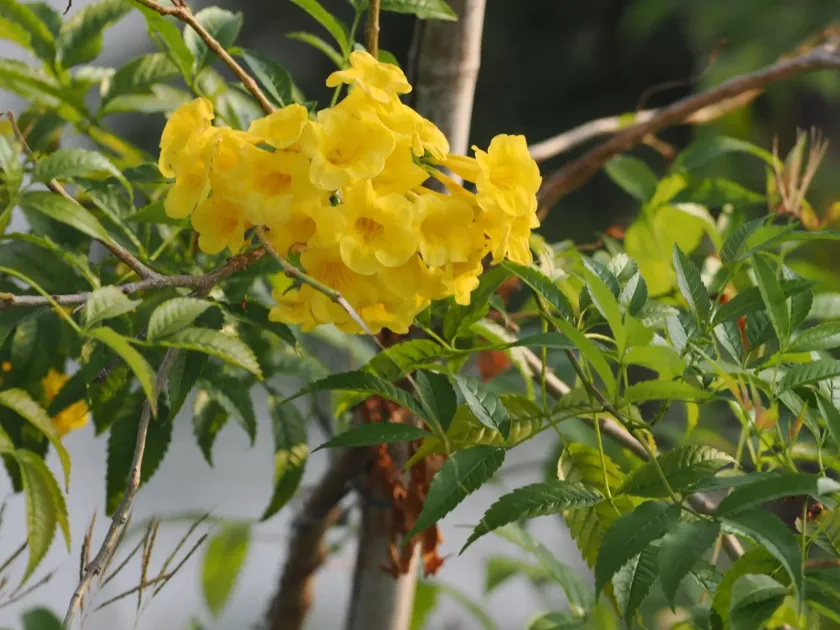
Description
Growing requirements
Tecoma stans, commonly known as yellow bells, is a member of the Bignoniaceae family. It is a perennial shrub or small tree widely recognized for its vibrant, trumpet-shaped flowers.
Originally native to the Americas, ranging from the southern United States to Argentina, the plant is now cultivated globally in tropical and subtropical climates as an ornamental landscape plant.
The species thrives in full sun exposure and is highly adapted to arid conditions once established, although regular watering ensures higher biomass production and more prolific flowering.
It prefers well-drained, fertile soil. While it tolerates various soil types, it performs best in sandy or loamy substrates that do not retain excess water, which could lead to root hypoxia.
Temperature sensitivity is a limiting factor; the plant is not frost-tolerant. In cooler zones, it is treated as a potted crop or a seasonal annual to prevent cold damage during winter months.
Main diseases and pests
Major threats to Tecoma stans include common sucking pests such as spider mites, aphids, and whiteflies, especially when grown in greenhouses or sheltered environments.
Root rot caused by waterlogged soil is a significant agronomic risk. Proper drainage management is essential to prevent pathogenic fungi from attacking the root system.
Fungal leaf spots can occur under high humidity conditions, necessitating improved airflow and, if necessary, the application of preventative systemic fungicides.
In certain regions, caterpillars and leaf-eating beetles may cause defoliation, which should be addressed by monitoring and the timely use of biological control agents.
Nutrient deficiencies, specifically iron chlorosis, can occur if the soil pH becomes too alkaline, requiring soil acidification to maintain optimal nutrient uptake and plant health.