
Moreton Bay pine
Araucaria cunninghamii Aiton ex A. Cunn.
Description
Growing requirements
Moreton Bay pine, scientifically known as Araucaria cunninghamii, belongs to the Araucariaceae family. It is a prominent evergreen conifer native to the rainforests of Australia and New Guinea, characterized by its stately, pyramidal growth habit.
The species thrives in warm, humid climates and is sensitive to frost during its juvenile stages. It requires well-drained, nutrient-rich soils to reach its full biological potential, as waterlogged conditions often lead to root decay.
In forestry applications, the tree demands significant space to accommodate its expansive crown. Site selection should focus on areas with high rainfall or reliable supplemental irrigation to ensure consistent growth rates during the establishment phase.
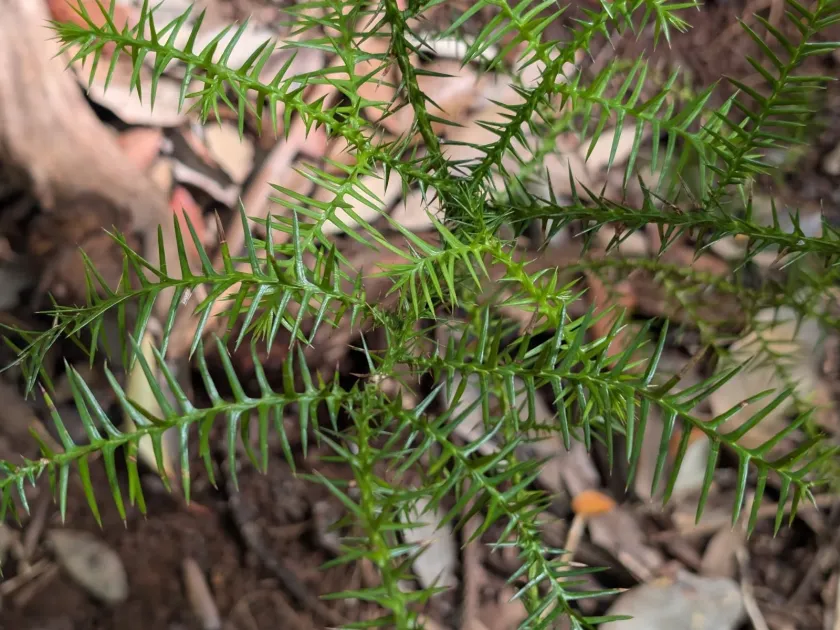
The botanical structure of the species involves stiff, sharp-pointed leaves and distinctively whorled branches. As the tree matures, the bark exfoliates in thin layers, which is a key identifying feature of the mature specimen.
Silvicultural practices include regular thinning to prevent overcrowding and ensure that each tree receives adequate sunlight, which is crucial for maintaining a straight trunk and high-quality timber development.
Yield
The economic importance of Araucaria cunninghamii is centered on its highly valued timber. The wood is pale, fine-textured, and remarkably uniform, making it a preferred choice for high-end woodworking and interior construction.
Timber utilization includes the manufacturing of plywood, high-quality furniture, and specialty musical instruments. Its lack of prominent resin canals enhances its versatility in painting and staining, providing a smooth finish for various applications.
Industrial yields are optimized through systematic plantation management. By controlling nutrient inputs and managing competitive vegetation, producers ensure that the trees grow to harvestable dimensions within a profitable time frame.
Beyond timber production, the species serves as a valuable ornamental tree in tropical and subtropical landscaping. Its unique architectural appearance makes it a landmark specimen in large garden settings and public parks.
Investing in this species provides long-term returns in the timber industry. The consistent quality of its wood ensures high demand, maintaining its status as a staple commercial timber species in its native range.
Main diseases and pests
The primary threats to the species involve fungal pathogens that affect foliage and root systems, often exacerbated by stagnant moisture and high relative humidity. Proper spacing remains the best preventative measure against spread.
Insect pests, such as bark beetles and various defoliators, represent a significant management concern. Periodic health assessments and biological control strategies are necessary to protect the integrity of the timber stand.